English
 Deutsch
Didn't find a product that suits you?
Contact us for the latest news.

Content
Yes, it is possible to replace rear shocks on many trucks without jacking up the vehicle — but only if the truck is already elevated enough by its stock ride height, and you have adequate working clearance underneath. On full-size trucks like the Ford F-150, Chevy Silverado 1500, or Ram 1500, the factory ground clearance (typically 8 to 10 inches) is often enough to slide under and access the lower shock mount with the right tools.
That said, working without a jack is only safe and practical under specific conditions. If the truck sits low, is on uneven ground, or if the shock mounting hardware is heavily corroded, you will almost certainly need to lift the truck. This article walks you through exactly when you can skip the jack, how to do it safely, and when lifting is unavoidable.
Rear shock absorbers on trucks are typically mounted between the rear axle housing (lower mount) and the frame or body (upper mount). Unlike front struts, they are not load-bearing suspension components, which means the rear suspension doesn't collapse when you remove them. This makes rear shock replacement significantly simpler and safer than front strut replacement, which almost always requires a jack and spring compressors.
Because rear shocks don't bear the vehicle's weight directly (the leaf springs or coil springs do), you can unbolt and re-bolt them while the truck sits on level ground. The axle stays in place, supported by the springs, and the shock simply spans between two fixed points.
All of the following conditions should be met before attempting a no-jack rear shock replacement:
Even without a jack, you still need the right tools. Using the wrong socket size or not having a breaker bar can turn a 30-minute job into a frustrating multi-hour ordeal.
| Tool | Purpose | Notes |
|---|---|---|
| 18mm or 21mm socket & ratchet | Remove upper/lower shock bolts | Check your specific truck model |
| Breaker bar or impact wrench | Break loose tight or corroded bolts | Essential for older trucks |
| Penetrating oil (e.g., PB Blaster) | Loosen corroded hardware | Apply 15–30 minutes before starting |
| Torque wrench | Tighten new bolts to spec | Typically 60–80 ft-lbs for rear shocks |
| Creeper or cardboard | Lie under the truck comfortably | Prevents back and hip strain |
| Safety glasses & gloves | Eye and hand protection | Rust and debris fall easily |
Follow these steps carefully. Work one side at a time so you always have a reference point and maintain suspension geometry.
Park on a flat, solid surface. Apply penetrating oil to both the upper and lower shock mounting bolts and let it soak for at least 15 to 30 minutes. This step alone can prevent broken bolts, especially on trucks with more than 80,000 miles or trucks in salt-belt states.
On most trucks, the upper shock mount is accessible from inside the truck bed or from behind the wheel well. On leaf-spring trucks (like a Silverado or F-150 with rear leaf springs), the upper mount bolt is usually visible near the frame rail. On coil-spring trucks (like a Ram 1500), it may be tucked higher up. Reaching the upper bolt without lifting is typically easier than the lower bolt.
Slide under the truck and locate the lower shock mount on the axle. Use your breaker bar or impact wrench to break it loose, then remove the bolt. Do not remove both bolts at once — remove the lower first, let the shock hang by the upper mount, then remove the upper.
With the lower bolt removed, the shock will swing freely. Reach up to the upper mount and remove that bolt. The old shock will drop down and can be pulled out from underneath.
Hold the new shock in position and insert the upper bolt first (hand-tight only). Then align the lower mount with the axle bracket and insert the lower bolt hand-tight. Once both bolts are in, torque them to spec — typically 60 to 80 ft-lbs, but always confirm with your vehicle's service manual.
Always replace shocks in pairs. Even if only one shock is obviously failed, the other side has endured equal mileage and wear. Replacing only one side leads to uneven damping, which causes the truck to pull or bounce asymmetrically under load.
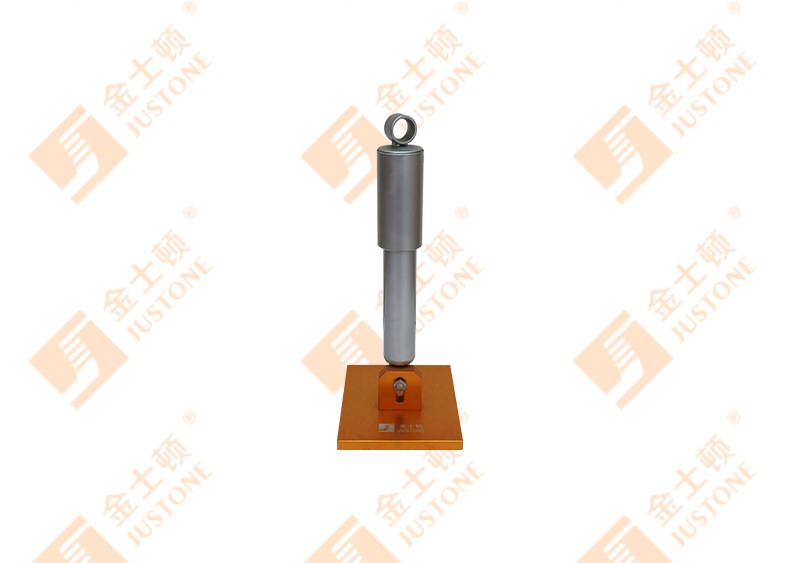
There are situations where skipping the jack is not practical or safe:
If you do need to jack the truck, always use jack stands rated for your truck's weight. A 3/4-ton or 1-ton truck can weigh over 7,000 lbs — never rely on a floor jack alone to support the vehicle while you work underneath it.
| Truck Type | Rear Suspension | Jack Needed? | Difficulty |
|---|---|---|---|
| Ford F-150 (2009–2024) | Coil spring | Usually not | Easy–Moderate |
| Chevy Silverado 1500 | Coil spring | Usually not | Easy–Moderate |
| Ram 1500 (2009–2024) | Coil spring (multilink) | Sometimes | Moderate |
| Toyota Tacoma / Tundra | Leaf spring | Usually not | Easy |
| Ford F-250 / F-350 Super Duty | Leaf spring | Rarely | Easy (high clearance) |
| Nissan Frontier / Titan | Leaf spring | Usually not | Easy |
For a DIYer working without a jack on a full-size truck with good hardware access, replacing both rear shocks typically takes 45 minutes to 1.5 hours. A professional shop will usually complete the same job in under an hour.
Shock absorbers themselves range widely in price. OEM-equivalent replacements (like Monroe OESpectrum or Gabriel Ultra) typically run $30 to $70 per shock. Upgraded options like Bilstein 5100s or Rancho RS5000X range from $80 to $150 per shock. Labor at a shop typically adds $100 to $200 total for a rear shock pair swap. Doing it yourself can save you that labor cost entirely, which is why it remains one of the more accessible DIY suspension jobs on a truck.
Contact us for the latest news.
Copyright @ Hangzhou Justone Industry Co., Ltd.
 OEM Commercial Vehicle Shock Absorbers Manufacturers
Wholesale Car Shock Absorbers Factory
OEM Commercial Vehicle Shock Absorbers Manufacturers
Wholesale Car Shock Absorbers Factory