English
 Deutsch
Didn't find a product that suits you?
Contact us for the latest news.

Content
Most trucks can be safely lifted between 6 to 12 inches depending on the platform, suspension design, and intended use. However, practical limits exist well before physical maximums due to safety concerns, handling degradation, and state regulations. The majority of states restrict bumper heights to 22-27 inches for pickup trucks, which typically translates to a maximum lift of 6-8 inches on most modern trucks when accounting for tire size.
Stabilizer shocks play a critical role in lifted trucks by controlling body roll and maintaining stability that conventional shocks cannot address alone. These supplementary dampers mount horizontally or diagonally across the suspension and reduce the amplified sway that occurs with raised centers of gravity. Trucks lifted beyond 4 inches should incorporate stabilizer shocks or upgraded sway bars to maintain safe handling characteristics on highways and during emergency maneuvers.
This range represents the most popular lift category, offering improved ground clearance and tire fitment without significant compromises. A 2.5-3 inch lift typically allows 33-inch tires on most half-ton trucks while maintaining factory-like ride quality and handling. These lifts rarely require extensive modifications beyond spacers or new coil springs and shocks.
At this height, stabilizer shocks are optional but recommended for trucks used in highway driving or those experiencing noticeable body roll. The suspension geometry remains close enough to stock that dramatic stability issues don't typically arise, though drivers may notice slightly increased lean in corners compared to the factory setup.
This category requires more substantial modifications including complete suspension replacement, differential drop brackets, and possibly driveline adjustments. The increased height allows 35-inch tires without trimming on most platforms and provides significant ground clearance for serious off-road use.
Stabilizer shocks become essential rather than optional at this lift height. The raised center of gravity creates measurable increases in body roll during cornering—testing shows 4-6 inch lifted trucks experience 30-40% more lateral weight transfer than stock configurations during lane changes at 65 mph. Quality stabilizer shocks reduce this roll by approximately 50%, bringing handling closer to acceptable parameters.
Lifts in this range sacrifice practicality for appearance and extreme off-road capability. They require custom fabrication work including new control arms, steering linkages, brake line extensions, and complete driveline modifications. Most builds at this height accommodate 37-40 inch tires and raise the frame rails 10-14 inches above stock height.
Multiple stabilizer shocks are mandatory for any semblance of safe road manners. Serious builders install dual stabilizers on the front axle and additional stabilizers on the rear, plus heavy-duty sway bars with polyurethane bushings. Even with these modifications, highway speeds above 70 mph become genuinely dangerous due to increased rollover risk and poor emergency handling response.
| State | Max Frame Height | Max Bumper Height | Practical Lift Limit |
|---|---|---|---|
| California | 27" | 24" | 6" |
| Texas | No Limit | No Limit | 12" |
| Florida | 27" | 27" | 6-8" |
| Pennsylvania | 24" | 24" | 4-6" |
| Colorado | No Limit | 28" | 8" |
| North Carolina | No Limit | 22" | 4-6" |
These regulations exist primarily for safety reasons—higher bumpers create mismatched crash structures that can override lower vehicles' safety systems in collisions. States with strict enforcement like California and Pennsylvania regularly cite lifted trucks during inspections, while states like Texas focus enforcement only on obviously unsafe configurations. Owners should verify current regulations with their state DMV before investing in lift kits, as violations can result in failed inspections and fines of $100-$500.
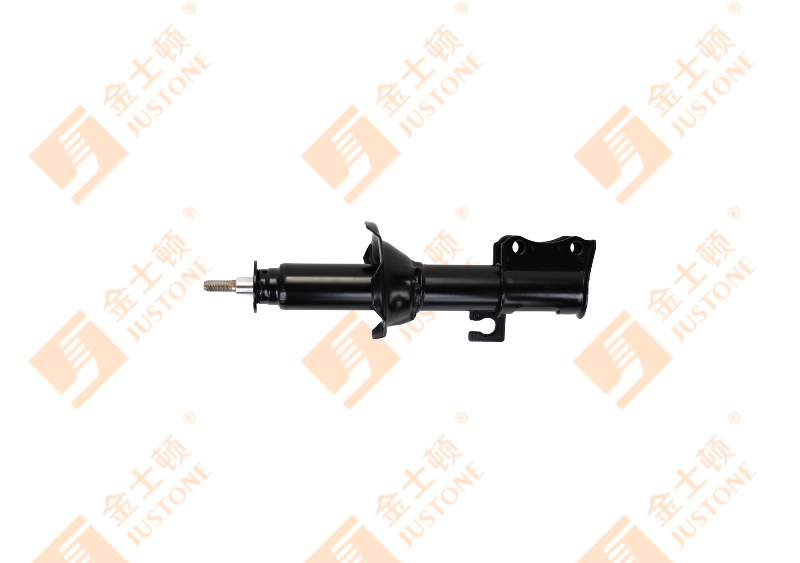
Stabilizer shocks—also called steering stabilizers when mounted on the front axle—work fundamentally differently than standard vertical shocks. While conventional shocks control vertical wheel movement, stabilizer shocks dampen lateral and rotational forces that cause body roll, steering wander, and axle deflection.
The typical mounting configuration places the stabilizer shock horizontally between the frame and axle housing, or diagonally from the frame to a control arm. When the truck leans during cornering, the stabilizer compresses or extends to resist this motion, generating hydraulic resistance that slows the weight transfer rate. This doesn't prevent the truck from leaning—physics still dictates that lateral forces create roll—but it controls how quickly and violently the lean occurs.
Stock trucks typically include a single stabilizer shock on solid front axles to control steering wobble. Lifted trucks benefit from dual stabilizers mounted in parallel, which provide several advantages:
Testing shows dual stabilizers reduce steering wheel kickback from impacts by approximately 60-70% compared to single stabilizers, a critical safety improvement for lifted trucks with aggressive tire treads. The cost difference is minimal—quality dual stabilizer kits from manufacturers like Bilstein or Fox cost $400-$600 compared to $150-$250 for single units.
Every inch of lift increases driveshaft operating angles, creating accelerated wear on universal joints and CV boots. Stock driveshafts typically function reliably at angles up to 3-4 degrees from horizontal. Beyond 6 inches of lift, angles often exceed 7-8 degrees, causing vibrations and reducing joint lifespan from 100,000+ miles to 20,000-30,000 miles.
Solutions include differential drop brackets that lower the front differential 2-3 inches relative to the frame, reducing driveshaft angles back to acceptable ranges. Alternatively, custom driveshafts with CV-style joints can handle steeper angles but cost $800-$1,500 per shaft. Independent front suspension trucks face more severe limitations, as CV axles begin binding and tearing boots at lifts beyond 4-5 inches without expensive aftermarket upper control arms.
Lifting a truck changes the relationship between steering linkage and suspension movement, creating bump steer—unwanted steering input caused by vertical wheel travel. Trucks lifted beyond 3 inches typically experience noticeable bump steer unless corrected with aftermarket steering components.
The severity increases exponentially with lift height. A 6-inch lift can produce 2-3 inches of steering input during full suspension compression, forcing the steering wheel to turn itself when hitting bumps. This phenomenon becomes genuinely dangerous at highway speeds, requiring constant corrective inputs from the driver. Proper correction requires dropped pitman arms, raised drag links, or complete steering system replacement, adding $300-$1,000 to the build cost.
The most critical limitation is rollover susceptibility. Insurance Institute for Highway Safety data shows that each inch of lift height increases rollover risk by approximately 8-10% during emergency maneuvers. A truck lifted 6 inches experiences nearly double the rollover risk compared to stock height when making a sudden swerve at 60 mph.
Stabilizer shocks mitigate but cannot eliminate this risk. Even with dual stabilizers and upgraded sway bars, a heavily lifted truck has fundamental physics working against it. The solution requires driver awareness and speed moderation—lifted trucks simply cannot corner at the same speeds as stock vehicles regardless of suspension upgrades.
| Brand/Model | Type | Damping Force | Price Range | Best Application |
|---|---|---|---|---|
| Bilstein 5100 | Monotube | Medium | $150-200 | 2-4" lifts, street use |
| Fox 2.0 Performance | Monotube | Medium-Firm | $180-240 | 4-6" lifts, mixed use |
| Rancho RS97000 | Twin-tube | Light-Medium | $80-120 | Budget builds, 2-3" lifts |
| King OEM Performance | Monotube | Firm | $220-300 | 6"+ lifts, heavy tires |
| BDS Steering Stabilizer | Twin-tube | Medium | $100-150 | Kit-matched, 3-6" lifts |
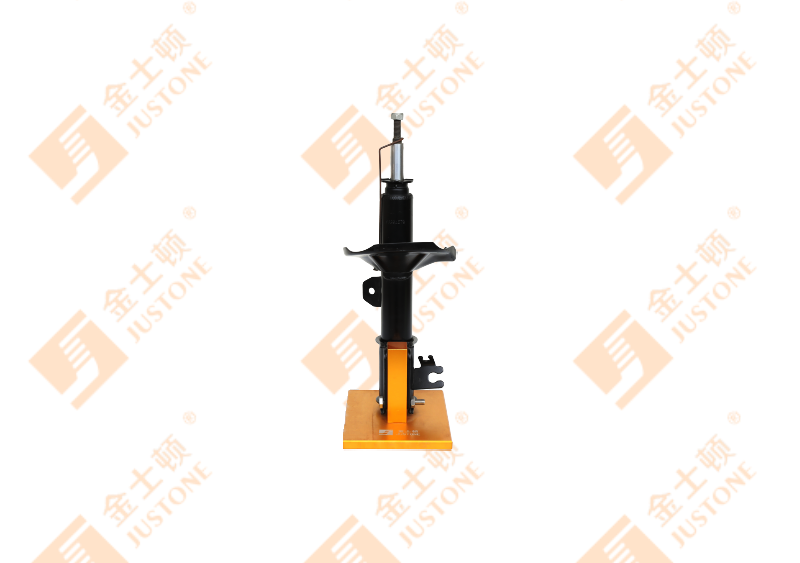
Selection should match both lift height and intended use. Street-focused trucks benefit from medium-damping stabilizers that provide control without harsh response, while off-road builds need firmer damping to handle large tire impacts and axle deflection. Many experienced builders recommend starting with quality medium-damping units and upgrading only if specific handling issues arise, rather than defaulting to the stiffest available option.
Proper stabilizer shock installation requires attention to mounting angle and preload. The shock should be mounted as close to horizontal as possible while maintaining adequate clearance from obstacles. Mounting angles beyond 15 degrees from horizontal reduce effectiveness by changing the leverage ratio and reducing available stroke.
Critical installation steps include:
Some builders install stabilizers too tightly, creating binding that fights steering input and causes premature wear. The shock should have slight play in the bushings when loose, compressing to proper tightness during installation. Overtightening beyond specified torque damages bushings and creates friction rather than hydraulic damping.
Stabilizer shocks typically last 50,000-75,000 miles in street-driven applications, though off-road use significantly reduces this lifespan to 20,000-40,000 miles depending on severity. Signs of wear include oil leakage around the shaft seal, loss of resistance when compressing by hand, and increased steering wander or wheel shimmy.
Regular inspection every 10,000 miles should check for:
Unlike vertical shocks, stabilizers cannot be reliably rebuilt by end users. Most manufacturers recommend complete replacement rather than service, though some high-end units like Fox and King shocks can be professionally rebuilt for $100-$150 per shock. This cost approaches new shock prices for economy brands, making replacement more economical in many cases.
Independent testing of lifted trucks with and without proper stabilization reveals significant measurable differences. A Ford F-250 with 6-inch lift and 37-inch tires demonstrated the following changes when dual stabilizers were added:
These improvements demonstrate that while stabilizers cannot return a lifted truck to stock-like handling, they provide measurable safety benefits that justify their cost. The emergency swerve improvement alone—representing a 21% increase in safe maneuvering speed—could prevent accidents in real-world situations.
Limit lift to 2.5-4 inches maximum for trucks that see primarily highway miles. This range provides meaningful ground clearance improvement and tire fitment while maintaining acceptable handling and fuel economy. A single quality stabilizer shock is adequate, though dual setup provides noticeable improvement in crosswind stability and steering precision.
The 4-6 inch range offers the best balance for trucks that split time between pavement and trails. Invest in dual stabilizers from reputable manufacturers and budget for necessary corrections including steering geometry fixes and possible driveline modifications. This category represents the practical maximum for trucks that must remain highway-capable while offering serious off-road performance.
For trucks trailered to off-road parks or used exclusively on private property, lifts can extend to 8-12 inches with appropriate fabrication work. However, understand that trucks at this extreme require extensive safety modifications including roll cages, harnesses, and bypass shocks to be operated safely. Dual stabilizers become just one component in a comprehensive suspension system that may cost $10,000-$20,000 when properly executed.
Understanding total investment helps owners make informed decisions about lift height. A complete 6-inch lift with proper supporting modifications typically includes:
| Component/Service | Cost Range | Notes |
|---|---|---|
| Lift Kit (6") | $1,500-3,000 | Quality varies significantly |
| Dual Stabilizer Kit | $400-600 | Essential for safety |
| Extended Brake Lines | $150-300 | Required for safe braking |
| Steering Corrections | $300-800 | Prevents bump steer |
| Differential Drop/CV Shafts | $400-1,500 | Depends on truck type |
| Installation Labor | $800-1,500 | 10-15 hours typical |
| Alignment | $150-300 | Specialized lift alignment |
| Total | $3,700-7,000 | Does not include tires/wheels |
Many buyers focus only on the lift kit cost and experience sticker shock when presented with the full modification list. However, skipping critical components like stabilizers or steering corrections creates genuinely dangerous vehicles. The stabilizer shocks represent just 8-12% of total project cost while providing disproportionate safety benefits—making them one of the most cost-effective components in any lift build.
Contact us for the latest news.
Copyright @ Hangzhou Justone Industry Co., Ltd.
 OEM Commercial Vehicle Shock Absorbers Manufacturers
Wholesale Car Shock Absorbers Factory
OEM Commercial Vehicle Shock Absorbers Manufacturers
Wholesale Car Shock Absorbers Factory