English
 Deutsch
Didn't find a product that suits you?
Contact us for the latest news.

Content
Motorhomes require heavy-duty shock absorbers specifically rated for their gross vehicle weight — standard passenger car or light truck shocks will not control the mass and body roll of a Class A, B, or C motorhome. Shock sizing is determined by extended and collapsed length plus the mounting hardware diameter, not by the vehicle's make alone. And for truck lifts, most states allow a maximum frame height of 24 to 28 inches from the ground for light-duty trucks, though individual state laws vary significantly and federal DOT regulations add additional constraints.
Each of these topics — motorhome shocks, shock sizing, and truck lift limits — deserves detailed treatment because getting any one of them wrong leads to safety issues, failed inspections, or premature component wear. The following sections address each in practical depth.
A Class A motorhome on a Spartan or Freightliner chassis can weigh between 26,000 and 45,000 lbs (GVWR). Even a smaller Class C on a Ford E-450 cutaway chassis weighs up to 14,500 lbs loaded. At these weights, conventional twin-tube shock absorbers designed for pickup trucks or SUVs are simply overwhelmed — they overheat, fade, and fail to control suspension oscillation, leading to the characteristic wallowing, pitching, and body sway that make long motorhome trips fatiguing and unsafe.
Motorhome shock absorbers fall into several categories based on construction and application:
| Motorhome Class | Typical Chassis | GVWR Range | Recommended Shock Type | Example Products |
|---|---|---|---|---|
| Class B (camper van) | Mercedes Sprinter, Ford Transit | 8,550–11,030 lbs | Heavy-duty twin-tube gas | Bilstein B4, Monroe OESpectrum |
| Class C | Ford E-450, Ram ProMaster | 12,500–14,500 lbs | Monotube or heavy-duty twin-tube | Bilstein B8, Gabriel HiJacker |
| Class A (gas) | Workhorse W22, Ford F-53 | 18,000–26,000 lbs | Heavy-duty monotube or air-assisted | Koni FSD, Roadmaster Active Susp. |
| Class A (diesel pusher) | Freightliner XCR, Spartan | 30,000–45,000 lbs | Remote reservoir or adjustable monotube | Koni Heavy Track, Fox 2.5 |
Motorhome shocks typically last 50,000 to 80,000 miles under normal use, though this varies considerably based on road quality and load. Replace them sooner if you notice:
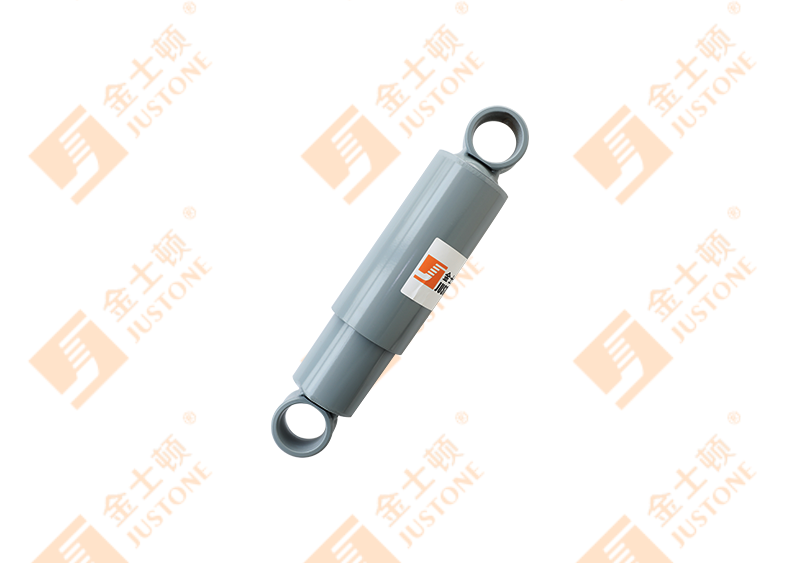
Shock absorber sizing is based on two primary measurements: extended length (the distance between mounting centers when the shock is fully stretched) and compressed length (the distance between mounting centers when the shock is fully collapsed). The difference between these two values is the shock's stroke — how much travel the shock can absorb.
For a replacement shock, the extended and compressed lengths must match the OEM shock within approximately ±0.25 inches to avoid binding at full droop or topping out at full compression. For lifted vehicles, longer shocks are required to maintain stroke through the increased suspension travel.
| Application | Typical Extended Length | Typical Compressed Length | Stroke | Typical Lift Compatibility |
|---|---|---|---|---|
| Compact truck / SUV (stock) | 15–17 in | 9–11 in | 5–7 in | Stock or 1–1.5 in lift |
| Full-size truck front (stock) | 19–22 in | 12–14 in | 7–9 in | Stock or 2 in level |
| Full-size truck rear (stock) | 17–20 in | 11–13 in | 6–8 in | Stock or 2 in lift |
| Full-size truck front (2–3 in lift) | 22–25 in | 14–16 in | 8–10 in | 2–3 in lift kit |
| Full-size truck front (4–6 in lift) | 25–30 in | 16–19 in | 9–12 in | 4–6 in lift kit |
| Class C motorhome front | 20–24 in | 13–16 in | 7–9 in | Stock ride height |
| Class A motorhome (tag axle) | 24–32 in | 15–20 in | 9–13 in | Stock ride height |
Beyond length, shock absorbers must match the mounting hardware configuration of the vehicle. Common mounting types include:
There is no single federal limit on how high a truck can be lifted in the United States — lift height regulations are set at the state level, and they vary enormously. Some states have no body lift restrictions; others limit bumper height, frame height, or overall vehicle height. The most commonly regulated measurements are:
| State | Max Front Bumper Height | Max Rear Bumper Height | Body Lift Limit | Notes |
|---|---|---|---|---|
| California | 24 in (under 4,500 lbs) | 26 in (under 4,500 lbs) | 5 in max body lift | Strict enforcement; CARB also limits suspension modifications |
| Texas | No specific limit | No specific limit | No state body lift limit | One of the most permissive states; federal height limits apply |
| Florida | No specific limit | No specific limit | No state body lift limit | Permissive; headlights must remain within certain height bands |
| New York | 24 in (under 4,500 lbs) | 26 in | 3 in max suspension lift | Restrictive; also limits chassis frame height to 23 in |
| Colorado | 28 in (under 4,500 lbs) | 30 in | 6 in suspension + 3 in body | Moderate; popular off-road state with relatively generous limits |
| Arizona | No specific limit | No specific limit | No state body lift limit | Very permissive; safety equipment function must be maintained |
| Washington | 26 in (under 4,500 lbs) | 30 in | 4 in suspension lift limit | Limits vary by GVWR class; stricter for lighter vehicles |
These figures represent general guidance only. State laws change frequently, and some counties or municipalities add local restrictions on top of state regulations. Always verify current rules with your state's DMV or motor vehicle code before installing a lift kit.
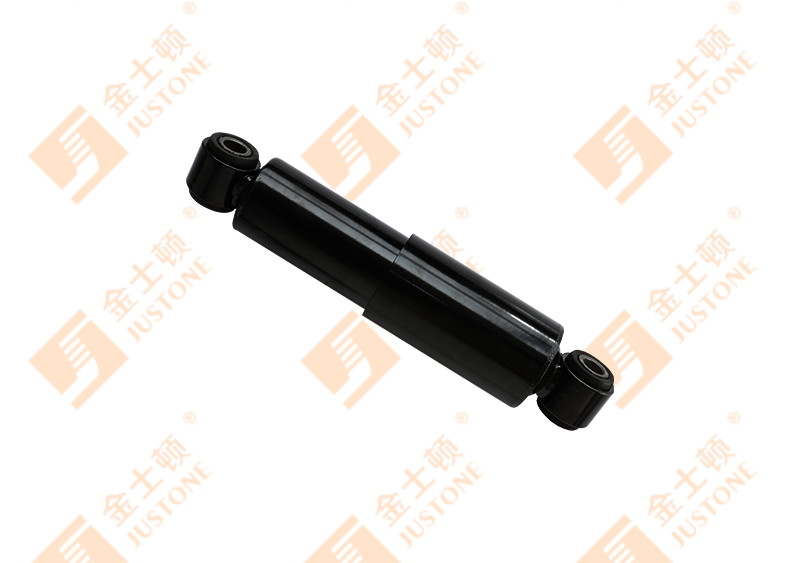
Lifting a truck changes the suspension geometry and increases the total suspension travel, which directly determines what shock absorber length is needed. Using a stock-length shock on a lifted truck is one of the most common — and most damaging — installation errors in the aftermarket lift industry.
A leveling spacer or strut extension of 1 to 2 inches raises the front of the truck without significantly changing suspension travel. In most cases, stock shocks will function adequately, though they will operate slightly closer to full extension during normal droop. Some truck owners upgrade to shocks with a slightly longer extended length (1 inch more than stock) for improved droop travel.
A 3 to 4 inch suspension lift significantly increases the distance between the upper and lower shock mounts at full droop. Stock shocks will bind or fully extend before the suspension reaches maximum droop, causing the shock body to absorb impact loads it was not designed to handle — leading to blown seals, bent shafts, and premature failure. Extended-travel shocks sized approximately 2–3 inches longer in extended length than OEM are required.
Lifts of 6 inches or more — popular on full-size trucks used for serious off-roading — require dedicated long-travel shock absorbers with extended lengths of 25–30 inches or more on the front axle. At this level, reservoir shocks (Fox 2.5, King 2.5, Bilstein 8100) are standard because the increased stroke generates more heat than a standard shock body can dissipate. These shocks also typically require relocation brackets to reposition the mount points for correct geometry.
Contact us for the latest news.
Copyright @ Hangzhou Justone Industry Co., Ltd.
 OEM Commercial Vehicle Shock Absorbers Manufacturers
Wholesale Car Shock Absorbers Factory
OEM Commercial Vehicle Shock Absorbers Manufacturers
Wholesale Car Shock Absorbers Factory