English
 Deutsch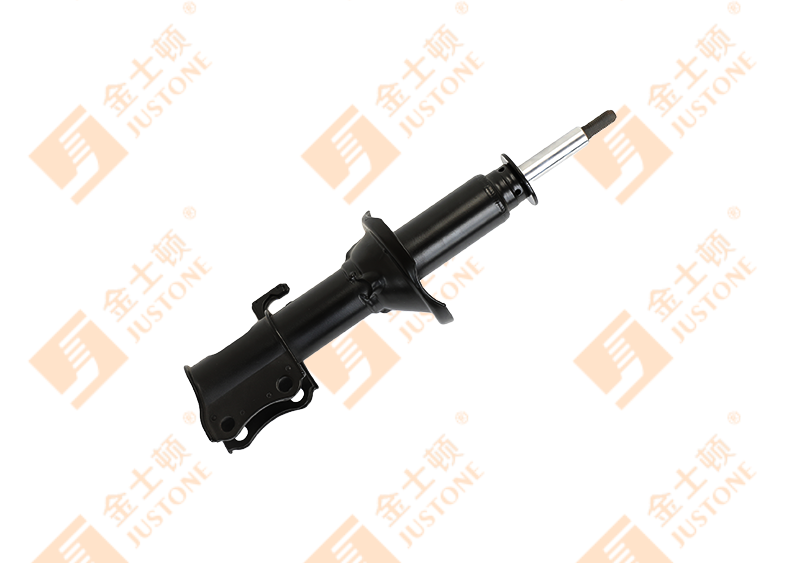
Didn't find a product that suits you?
Contact us for the latest news.

The automotive suspension and steering components sector is experiencing a wave of innovation in 2026, as manufacturers invest in advanced shock absorber technologies that directly improve steering precision, ride comfort, and vehicle safety. From major OEM patent filings to new aftermarket product launches, the industry is signaling that the role of the shock absorber in steering system performance has never been more critical.
Content
General Motors has filed a patent application (US 2025/0361920 A1) for a new variable shock absorber design that adjusts damping characteristics through internal mechanical movement rather than relying on electronic sensors or external control systems. Originally submitted to the USPTO in May 2024 and published in November 2025, the patent was developed by a team of India-based engineers including Vijaiya Ramakrishnan, Biju Thomas, and Rama Potharaju.
At the core of the design is a guide rod with a specially shaped guide groove on its outer surface. A piston rod assembly containing valve discs with fluid orifices interacts with this groove. As suspension movement changes in amplitude and frequency — from small road imperfections to larger potholes or aggressive cornering — the valve discs rotate relative to each other, varying the flow of oil through the damper and automatically adjusting damping force.
The practical implication for steering performance is significant. By reducing reliance on complex electronic controls, the system can deliver improved straight-line stability and handling response with fewer points of potential failure — a key concern for both OEM integration and long-term vehicle reliability.
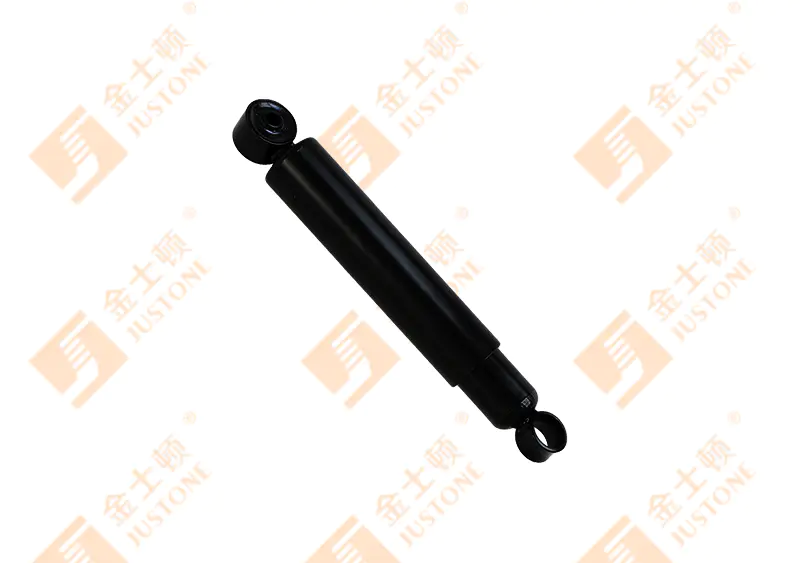
On the aftermarket side, febi — part of the Ferdinand Bilstein group — announced in March 2026 the launch of a new dedicated shock absorber range for passenger cars, developed specifically for independent workshops. The range emphasizes OE-matching performance, reliable fit accuracy, and durable build quality.
Each unit in the new febi lineup undergoes a three-stage approval process covering damping stability, handling control, and long-term comfort. The company has also incorporated practical workshop features including QR code access to a parts finder, OE-matching design for straightforward installation, and a durable silk-black e-coating for corrosion resistance.
With over 600 shock absorbers now available covering more than 60,000 applications across passenger cars and light commercial vehicles, febi's expansion reflects growing demand for reliable suspension parts that support steering precision without the cost of dealer-sourced components. Ferdinand Bilstein will present the full range at the 2026 Auto Trade EXPO in Dublin, scheduled for October 10–11.
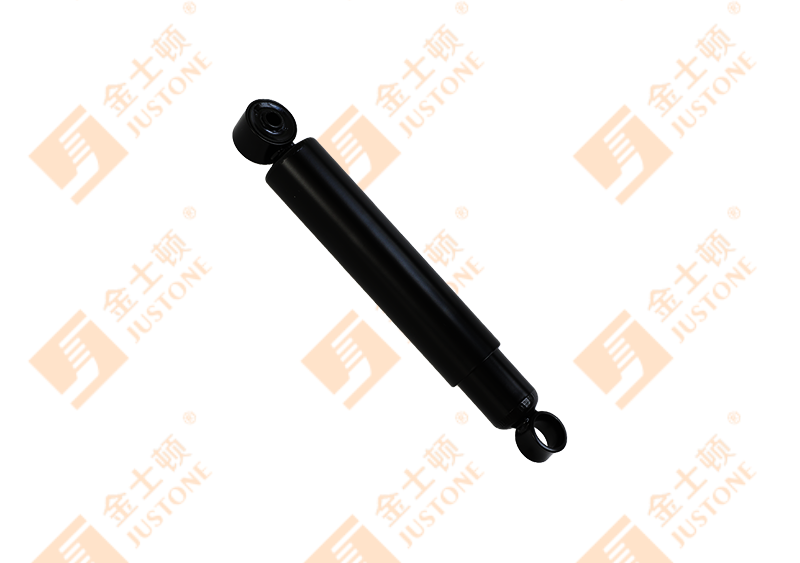
The relationship between shock absorbers and steering is often underestimated. A steering shock absorber — sometimes called a steering stabilizer or steering damper — functions by absorbing vibrations, impacts, and oscillations before they travel from the wheels to the steering system and ultimately the driver's hands. Industry data indicates that a properly functioning steering shock absorber can reduce the transmission of wheel impacts to the steering system by as much as 30%.
Steering stabilizers are particularly relevant in vehicles fitted with recirculating ball or steering box systems, as well as trucks and SUVs running larger aftermarket tires. In these applications, additional stress placed on the steering geometry by tire size and weight makes damping control essential for preventing "death wobble" — a rapid, uncontrollable oscillation triggered by worn components or inadequate damping.
Steering shock absorbers are available in several configurations:
The activity around shock absorbers and steering components comes amid a broader strategic shift in the automotive industry. Research published by Syncron in late 2025 found that the aftermarket service bay already accounts for 10–29% of manufacturers' global revenue, with projections suggesting this share could reach 30–49% within five years. Nearly one-third of U.S. automakers anticipate that parts and service will contribute at least half of their total revenue within that same window.
This shift is being accelerated by tariff pressures, trade policy volatility, and supply chain fragility — factors that have made predictable aftermarket income increasingly attractive to OEMs. For suspension and steering categories, this means both automakers and independent parts brands are competing more aggressively for service and replacement business.
For buyers and workshop operators, the current market offers more choice than at any previous point — from factory-direct procurement models to expanding OE-quality aftermarket ranges. As new innovations like GM's mechanically adaptive shock absorber move toward potential production, the category shows no sign of slowing its development pace.
Contact us for the latest news.
Copyright @ Hangzhou Justone Industry Co., Ltd.
 OEM Commercial Vehicle Shock Absorbers Manufacturers
Wholesale Car Shock Absorbers Factory
OEM Commercial Vehicle Shock Absorbers Manufacturers
Wholesale Car Shock Absorbers Factory