English
 Deutsch
Didn't find a product that suits you?
Contact us for the latest news.

Content
The TRD Pro suspension represents Toyota's most advanced off-road suspension system, featuring Fox 2.5-inch internal bypass shocks with remote reservoirs, upgraded springs, and enhanced damping technology. This system delivers 2.5 inches of front lift and improved wheel travel compared to standard models, transforming vehicles like the Tacoma, 4Runner, and Tundra into capable off-road performers without sacrificing daily driving comfort.
Unlike conventional suspension upgrades, TRD Pro components are engineered specifically for each vehicle platform, ensuring optimal geometry and performance. The system costs approximately $3,000-$4,000 as a standalone upgrade, though it comes standard on TRD Pro trim vehicles which typically add $10,000-$15,000 to the base price.
The heart of the TRD Pro suspension is the Fox 2.5-inch internal bypass shock absorber with remote reservoir. These shocks feature multiple compression zones within a single shock body, providing progressive damping that adjusts to terrain conditions. The internal bypass design allows the shock to be firm during small bumps for better handling, yet softer during larger compressions for improved absorption.
The remote reservoir serves two critical functions: it increases total oil capacity by approximately 50% compared to standard shocks, and it allows heat dissipation away from the main shock body. During extended off-road sessions, this design maintains consistent damping performance where conventional shocks would fade. Testing data shows these shocks maintain 85% of their damping force after 30 minutes of continuous desert running, compared to 60% for standard twin-tube shocks.
TRD Pro springs are specifically tuned to work with the Fox shocks while supporting the added weight of off-road accessories. The front coil springs typically have rates around 350-400 lb/in, which is 15-20% stiffer than stock but softer than many aftermarket options. This balanced approach prevents the harsh ride common with heavily modified suspensions.
The rear leaf spring pack on Tacoma and older 4Runner models includes an additional leaf and revised eye bushings to reduce axle wrap under acceleration. For the Tundra's coil-spring rear suspension, rates increase similarly while maintaining proper load capacity for towing up to the vehicle's rated capacity.
| Vehicle Model | Front Lift | Rear Lift | Wheel Travel Increase | Approach Angle |
|---|---|---|---|---|
| Tacoma | 2.5" | 1.5" | +1.2" | 36° |
| 4Runner | 2.0" | 1.0" | +0.8" | 33° |
| Tundra | 2.0" | 1.5" | +1.0" | 28° |
| Sequoia | 2.0" | 1.0" | +0.9" | 30° |
These measurements represent improvements over base SR5 or equivalent trims. The increased approach angles allow drivers to tackle steeper inclines without bumper contact, while the additional wheel travel improves articulation over uneven terrain. Real-world testing shows the Tacoma TRD Pro can maintain three-wheel contact on obstacles where stock suspension would lift a wheel.
Despite its off-road focus, the TRD Pro suspension maintains surprisingly civilized highway manners. The Fox shocks' bypass technology means they remain relatively stiff during normal driving, limiting body roll in corners. Independent testing by automotive journalists has measured lateral acceleration of 0.72g on the Tacoma TRD Pro, comparable to the stock version's 0.74g despite the higher center of gravity.
The ride quality is noticeably firmer than stock, particularly over sharp expansion joints or potholes at low speeds. However, at highway speeds over rolling pavement, the suspension actually feels more controlled than the softer stock setup, with less float and better damping of secondary motions. Wind noise and tire roar from the aggressive tread patterns typically have more impact on highway comfort than the suspension itself.
The TRD Pro suspension truly excels in off-road environments where its design intent becomes apparent. Key performance improvements include:
Fox shocks in TRD Pro applications are designed for extended service intervals but require periodic maintenance to maintain performance. Toyota recommends inspection every 12,000 miles and rebuild service every 50,000-75,000 miles depending on use. Hardcore off-road users should consider rebuilds at the shorter interval, while predominantly street-driven vehicles can safely extend to 75,000 miles.
Rebuild costs through authorized Fox service centers typically run $400-$600 for all four shocks, including new seals, oil changes, and nitrogen recharging. This is considerably less expensive than replacement, as individual Fox 2.5 shocks retail for $800-$1,000 each. Signs that rebuild is needed include:
The springs and other suspension components typically outlast the shocks, with replacement needed only after accident damage or extreme use. Upper control arms, ball joints, and bushings should follow Toyota's standard maintenance schedule.
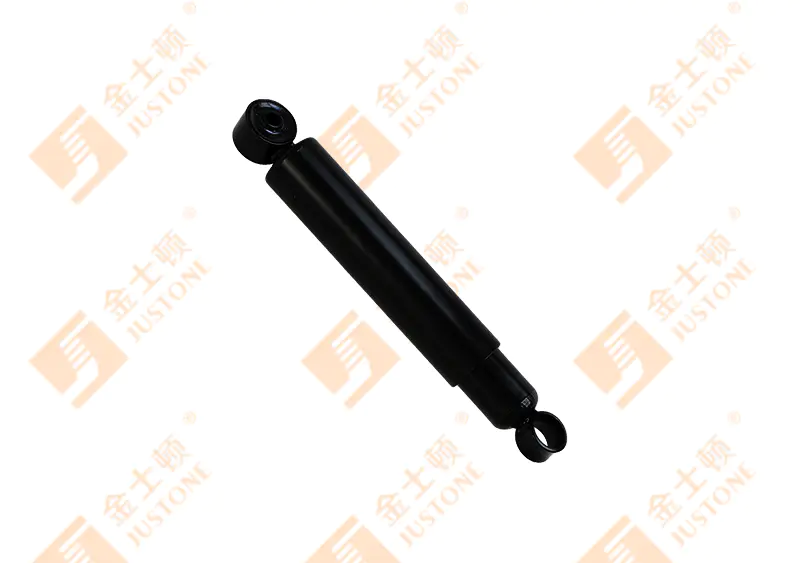
The TRD Pro suspension occupies a middle ground between stock setups and extreme aftermarket builds. When comparing value and performance, several factors deserve consideration:
| System Type | Approximate Cost | Lift Height | Warranty Impact | Best Use Case |
|---|---|---|---|---|
| TRD Pro | $3,500 | 1.5-2.5" | Fully Covered | Balanced street/trail |
| Bilstein 6112/5160 | $2,200 | 0-2.5" | May Void | Budget upgrade |
| King 2.5 Remote | $4,800 | 2-4" | Voids | Serious off-road |
| Icon Stage 7 | $6,500 | 3-4" | Voids | Extreme builds |
The TRD Pro's main advantage is full factory warranty coverage, including the powertrain warranty that aftermarket suspensions typically void. For buyers planning to keep their vehicle under warranty or who want Toyota-backed reliability, this represents significant value. Performance-wise, the TRD Pro setup matches or exceeds systems costing $1,000-$1,500 less while including professional installation and alignment.
However, serious off-road enthusiasts who require maximum wheel travel or larger tire clearance will find the TRD Pro suspension limiting. Systems like Icon Stage 7 or King coilovers provide adjustable ride height, user-tunable damping, and support for 35-inch tires without modification—capabilities the TRD Pro cannot match without voiding its warranty.
TRD Pro suspension components are designed for bolt-on installation without cutting or welding. Professional installation typically requires 4-6 hours of labor at a cost of $400-$800 depending on regional labor rates. While mechanically skilled owners can perform the installation with basic tools, proper alignment equipment is essential afterward.
Critical alignment specifications after TRD Pro installation include:
Many owners report that dealerships struggle with proper TRD Pro alignment, particularly achieving the correct caster angle. Specialized off-road shops or alignment centers experienced with lifted trucks typically deliver better results. Expect to pay $150-$250 for a proper four-wheel alignment that accounts for the suspension's modified geometry.
The TRD Pro suspension's lift provides clearance for larger tires, though limitations exist depending on the vehicle platform. The Tacoma TRD Pro accommodates 33-inch tires (285/70R17) without rubbing, while the 4Runner and Tundra can fit similar sizes. Attempting to install 35-inch tires typically requires additional modifications like fender trimming or aftermarket upper control arms.
Popular tire choices that work well with TRD Pro suspension include:
Larger tires do impact performance beyond just aesthetics. Moving from the stock 265mm width to 285mm reduces fuel economy by approximately 1-2 mpg and slightly decreases acceleration due to the added rotational mass. However, the improved traction and ground clearance typically justify these minor compromises for off-road focused drivers.
Analysis of owner forums and long-term reviews reveals consistent patterns in TRD Pro suspension performance. After 50,000+ miles of use, most owners report maintained performance with proper maintenance, though specific experiences vary by use case.
Common positive feedback includes improved confidence on technical trails, better high-speed desert running capability, and minimal degradation of daily driving comfort. The warranty coverage provides peace of mind that aftermarket setups cannot match, particularly for owners who use their vehicles as primary transportation.
Criticisms typically center on the firm ride quality during slow-speed street driving and limitations for extreme off-road use. Owners who regularly tackle difficult rock crawling or require maximum articulation often upgrade to longer-travel aftermarket systems within 2-3 years. The TRD Pro suspension works best for drivers who spend 70-80% of time on pavement with occasional weekend trail adventures, rather than dedicated off-road vehicles.
Resale value impact is notably positive, with TRD Pro equipped vehicles commanding premiums of $2,000-$3,000 in the used market compared to equivalent models with stock suspension. This strong residual value helps offset the initial investment for buyers who trade vehicles every 3-5 years.
Toyota continues refining the TRD Pro suspension with each vehicle generation. The latest iterations include improved shock tuning based on data collected from off-road competitions and customer feedback. Recent changes for 2024-2025 model years include revised bypass tuning for better low-speed compliance and updated spring rates that better accommodate common accessory weights like roof racks and bumpers.
Industry trends suggest future TRD Pro suspensions may incorporate electronically adjustable damping, allowing drivers to switch between comfort and sport modes. Similar systems from competitors like Ford's Live Valve technology and Ram's active suspension demonstrate the viability of this approach, though Toyota has not officially announced such developments. The company's conservative engineering approach typically means new technologies arrive fully developed rather than as experimental features.
Contact us for the latest news.
Copyright @ Hangzhou Justone Industry Co., Ltd.
 OEM Commercial Vehicle Shock Absorbers Manufacturers
Wholesale Car Shock Absorbers Factory
OEM Commercial Vehicle Shock Absorbers Manufacturers
Wholesale Car Shock Absorbers Factory