English
 Deutsch
Didn't find a product that suits you?
Contact us for the latest news.

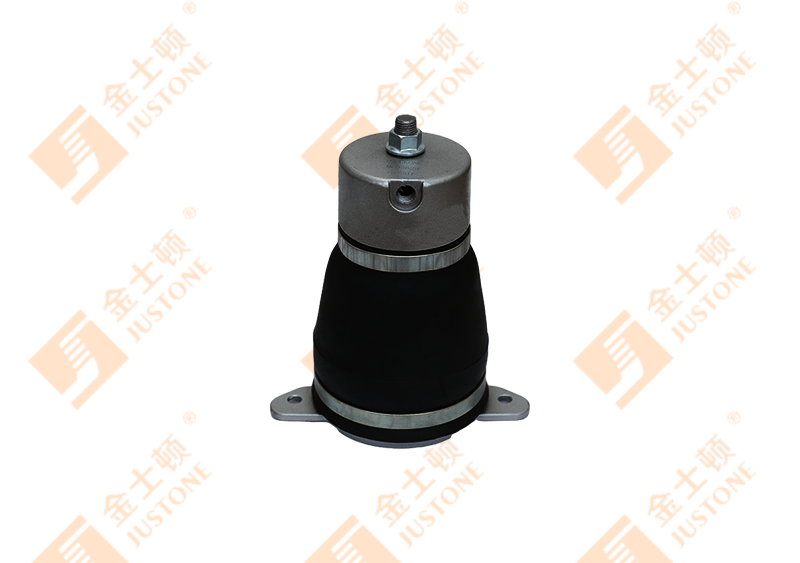
Air bag suspension systems replace or supplement your vehicle's factory springs with inflatable rubber air springs that can be pressurized to match the load you're carrying. The core appeal is adjustability: add air when the truck is loaded or towing, release air when it's empty, and your vehicle stays level regardless of what's behind it or in the bed. But that adjustability only works when you understand what PSI to run. The right pressure is not a fixed number — it changes with your load, your vehicle, and your conditions. This guide provides a practical suspension PSI reference chart and explains the variables that determine where your pressure should actually sit.
Content
Air bag suspension systems work by placing inflatable rubber springs between the vehicle's frame and axle — typically at the rear, where load weight concentrates. When a load is placed on the vehicle, the extra weight compresses the suspension and causes the rear to sag. Inflating the air bags increases their internal pressure, which pushes back against the added weight and restores ride height. Deflating them softens the ride when the truck is empty.
PSI — pounds per square inch — is the measure of that internal pressure. Running the correct PSI is what makes the entire system work. Too little pressure and the bags cannot support the load: the vehicle sags, steering becomes light, headlights angle upward, and braking distances increase. The bags may also fold or contact surrounding components, causing accelerated wear and eventual failure. Too much pressure and the ride becomes harsh and jarring, tire contact with the road surface is reduced, and traction suffers — particularly noticeable over uneven surfaces at highway speed.
One principle overrides all specific numbers: the goal is not to hit a target PSI, but to restore your vehicle to its proper loaded ride height. PSI is the tool; level is the result. Always maintain the minimum pressure recommended by your kit manufacturer — typically 5–10 PSI — even when the vehicle is completely unloaded. This prevents the bags from collapsing, folding, or rubbing against the axle or frame.
The following chart provides general PSI reference ranges organized by load condition. These ranges reflect real-world data from common half-ton and three-quarter-ton truck applications with standard air helper spring kits. They are starting points — your specific setup may require adjustment based on the factors discussed in the next section.
| Load Condition | Typical PSI Range | Common Application | Notes |
|---|---|---|---|
| Unloaded (empty truck) | 5–15 PSI | Daily driving, no cargo or trailer | Never drop below 5 PSI; minimum pressure prevents bag damage |
| Light load (under 500 lbs) | 15–30 PSI | Toolbox, light gear, small payload | Adjust until rear stance matches unloaded height |
| Medium load (500–1,500 lbs) | 30–50 PSI | Gravel, lumber, equipment, bed-heavy cargo | Check headlight aim; should not angle upward |
| Heavy load (1,500–3,000 lbs) | 50–70 PSI | Full bed load, large slide-in camper | Maintain partial spring engagement for stability |
| Towing (moderate tongue weight) | 25–50 PSI | Travel trailer, boat, small fifth wheel | Set after hitching; use ride height method |
| Towing (heavy tongue weight) | 50–80 PSI | Large fifth wheel, gooseneck, heavy equipment | Balance bags side-to-side; check steering response |
| Maximum (near GVWR) | Up to 100 PSI | Maximum rated payload or tow weight | Never exceed manufacturer's maximum PSI rating |
A 100 PSI upper limit applies to most standard helper spring kits. Never exceed the maximum PSI stamped on your specific air bag or listed in the product documentation. Exceeding maximum pressure does not improve load support — it risks bag rupture and sudden suspension failure.
The PSI ranges above are guidelines, not absolutes. Several variables shift where the correct pressure actually falls for your specific vehicle and situation. Understanding these factors is what separates a properly dialed-in setup from one that's just guessing.
Factory spring condition. If your leaf springs are worn, compressed, or sagging from years of use, the air bags will need to carry more load to compensate. A truck with healthy, stiff factory springs may level out at 30 PSI under a moderate load; the same truck with fatigued springs may require 50 PSI or more to achieve the same ride height. Air bags supplement the factory suspension — they do not replace it. If your springs are significantly degraded, addressing them first will produce better results at lower, safer pressures.
For a deeper look at how suspension geometry interacts with ride height modifications, see our guide on how high you can lift a truck and the stability factors involved.
Air bag kit design and capacity. Different kits have different spring rates and pressure ranges. A heavy-duty kit designed for three-quarter-ton and one-ton trucks will achieve the same load support at a higher PSI than a kit designed for half-ton applications. Always match the kit to the vehicle's weight class, and use the manufacturer's load chart for your specific part number when one is available.
Temperature. Air pressure changes with ambient temperature — the same physical principle that affects your tire pressure. A system calibrated at 75°F will show higher pressure on a hot afternoon and lower pressure on a cold morning, even with no change to the load. As a general rule, expect approximately 1–2 PSI change per 10°F temperature shift. Check your bags in the morning before the day heats up if precision is important, and recheck after significant temperature swings.
Load distribution. If cargo or tongue weight is not evenly distributed side to side, one bag will be working harder than the other. Always inflate bags independently and check that the vehicle sits level both from the rear and from the side. Uneven pressure between left and right bags creates handling imbalances that become especially pronounced during lane changes and emergency maneuvers.

The correct method for finding your working PSI is the ride height method — not guesswork, and not copying someone else's number from a forum. Every truck, every kit, and every load is different. These steps give you a repeatable, reliable process.
Once you find the sweet spot for your most common load, note the PSI. Many drivers keep a small reference card in the glovebox with their typical load scenarios and corresponding pressures. This eliminates the re-tuning process every time you hook up the same trailer.
The three most common use cases for air bag suspension each demand a different approach to pressure management. Understanding the logic behind each helps you make faster, more accurate adjustments in the field.
Unloaded daily driving. When the truck is empty, the only job of the air bags is to stay healthy — not to add stiffness or change the ride characteristic. Keep 5–15 PSI in the system to maintain bag shape and prevent contact damage. Running significantly above this range when empty will make the ride noticeably harsher than stock, which defeats the purpose. Some kit designs — particularly those with internal jounce bumpers — can be safely run at or near 0 PSI when empty; check your product documentation to confirm.
Towing a trailer. When towing, the tongue weight pushes down on the hitch and compresses the rear suspension. The air bags counteract this compression. Start with the vehicle hitched and loaded, then inflate until the truck returns to near its unhitched ride height. For most travel trailer setups with moderate tongue weight, 25–50 PSI is the typical working range. For heavier fifth wheels and gooseneck configurations with significant pin weight, 50–80 PSI is more common. The goal is a level truck, not a specific number. If you're using a weight distribution hitch, set the hitch first, then adjust air bag pressure — the two systems interact and should be calibrated together. For heavy commercial towing applications, pairing air bag suspension with quality trailer dampers further improves stability and reduces oscillation on long hauls.
Hauling cargo in the bed. Bed loads compress the rear suspension differently than tongue weight does. Heavy bed loads — particularly those loaded toward the rear — can push the suspension down significantly. Use the ride height method to find working pressure, but be mindful that very high PSI under a bed load can create a stiff, uncomfortable ride for passengers. Aiming for ride height restoration rather than maximum firmness typically produces the best balance of support and comfort.
Most air bag suspension problems trace back to a small set of recurring pressure management errors. Recognizing them in advance helps you avoid both comfort complaints and premature component failure.
Running zero pressure when unloaded. This is the single most common cause of air bag failure. Without minimum pressure, the bag collapses, folds against itself, and abrades on the axle or frame. Even a single long trip with no air in the bags can cause permanent creasing and cracking that shortens bag life dramatically. Always maintain the manufacturer's minimum — typically 5 PSI — even when the truck is sitting in the garage for weeks.
Setting pressure before loading. Inflating the bags before attaching a trailer or loading cargo produces an inaccurate result. The bag is already partially extended, and when the load is added, the apparent pressure will be lower than what the loaded system actually needs. Always load first, then inflate to ride height.
Over-inflating in pursuit of a firmer ride. More pressure does not always mean better performance. Exceeding the pressure needed to restore ride height removes the cushioning effect of the factory springs entirely, transfers all load to the air bags, and produces a jarring ride that defeats the purpose of the upgrade. If the ride feels harsh, the PSI is probably too high — not too low.
Ignoring temperature-driven pressure changes. A system that was perfectly dialed in on a summer afternoon may feel noticeably different on a cold morning. Particularly for setups used in varying climates or across seasons, periodic pressure checks keep the system performing as intended. An on-board compressor system with a gauge makes this adjustment effortless and eliminates the need to find an air source when pressure drops unexpectedly.
Using one number for every situation. A PSI that works perfectly for a loaded fifth wheel will produce an overly stiff, bouncy ride when the truck is empty. Drivers who set their bags to one number and leave them there are not getting the full benefit of an adjustable system. Taking a few minutes to adjust pressure before each load change is what the system is designed for.
Contact us for the latest news.
Copyright @ Hangzhou Justone Industry Co., Ltd.
 OEM Commercial Vehicle Shock Absorbers Manufacturers
Wholesale Car Shock Absorbers Factory
OEM Commercial Vehicle Shock Absorbers Manufacturers
Wholesale Car Shock Absorbers Factory