English
 Deutsch
Didn't find a product that suits you?
Contact us for the latest news.

Pull the old shock off any car built before 1990 and you will almost certainly be holding a hydraulic unit. Pull the shock off almost any new truck, SUV, or performance car and it will be gas-charged. That shift did not happen by accident — it reflects a genuine difference in how the two technologies handle the physics of damping. Understanding what separates them is the fastest way to make the right call when your suspension needs attention.
Content
A hydraulic shock absorber — also called an oil shock or twin-tube damper — does one thing: forces hydraulic fluid through a series of small orifices and valves as the piston moves up and down inside the cylinder. The resistance created by that fluid movement converts suspension motion into heat, which dissipates through the shock body into the air.
The construction is straightforward. An inner cylinder houses the piston and rod. An outer cylinder acts as a reservoir for displaced fluid. Valves between the two tubes control rebound and compression rates. No gas, no floating piston, no pressurized chamber — just oil and precision-machined passages.
That simplicity is a genuine advantage. Hydraulic shocks are cheaper to manufacture, easier to rebuild, and widely available. For vehicles driven on smooth roads at moderate speeds, they do the job without complaint. The ride is soft and compliant — characteristics that many drivers actively prefer.
The limitation shows up under sustained or aggressive use. As the piston churns the oil rapidly, heat builds faster than it can dissipate. Hot oil becomes thinner, flowing more easily through the valve orifices — meaning less resistance, less damping. Simultaneously, dissolved air and vapor bubbles form in the fluid, a condition called aeration. The result is shock fade: the damper progressively loses its ability to control suspension movement. On a washboard road, a loaded trailer approach, or a mountain descent, that fade is not subtle — the ride becomes bouncy, body control degrades, and handling suffers measurably.
A gas-charged shock absorber starts from the same hydraulic foundation but solves the aeration problem at its root. Pressurized nitrogen — typically between 100 and 360 psi depending on the application — is introduced into the shock, separated from the hydraulic fluid by a floating piston or flexible membrane.
The nitrogen serves a specific mechanical purpose: it keeps the oil under constant pressure, preventing dissolved air from separating out and forming bubbles even when the piston is moving rapidly. Because oil does not compress and nitrogen does, the piston can act immediately on the fluid the moment suspension input arrives, with no lag while air pockets collapse first.
The practical result is a shock that responds faster, fades less, and handles heat more effectively. The nitrogen also helps maintain consistent oil viscosity across a wider temperature range, which means damping rates stay predictable whether the shock is cold at startup or hot after an extended mountain run.
Most gas shocks on the market are twin-tube designs — the same outer/inner cylinder layout as hydraulic units, with the gas chamber added. High-performance applications use monotube designs, where the gas and oil share a single cylinder separated by the floating piston. Monotubes run cooler, mount in any orientation, and respond even faster, but they cost more and are more sensitive to installation angle.
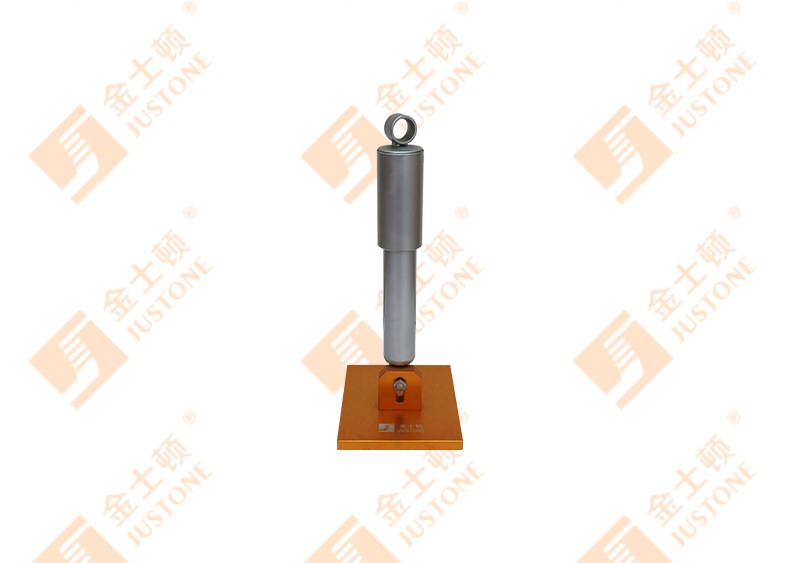
| Characteristic | Hydraulic Shocks | Gas Shocks |
|---|---|---|
| Working fluid | Oil only | Oil + pressurized nitrogen |
| Response speed | Slight lag (air must compress first) | Immediate (no air in oil) |
| Ride character | Softer, more compliant | Firmer, more controlled |
| Fade resistance | Moderate — degrades under sustained load | High — consistent under heavy/prolonged use |
| Heat management | Limited | Superior |
| Cost | Lower | Higher |
| Best application | Daily commuting, classic vehicles, smooth roads | Off-road, towing, performance, heavy loads |
The pressure inside a gas shock means the piston is always working against a pre-load. That makes the damper more responsive but also firmer — small imperfections in the road surface that a hydraulic shock would filter out become more noticeable. For drivers who prioritize a pillowy, isolated ride on smooth city streets, a hydraulic shock is not the inferior choice. It is simply optimized for different conditions.
The gap in ride feel has narrowed considerably on modern gas shocks, which use sophisticated multi-stage valving to deliver compliance at low suspension speeds while stiffening progressively as input intensity increases. A well-designed gas shock can feel nearly as comfortable as a hydraulic unit in everyday conditions while still outperforming it when the roads get rough or the loads get heavy. That dual capability is why gas-charged technology has become the default for factory fitment on virtually every truck, SUV, and performance vehicle produced today.
Off-road use is where the difference between the two technologies becomes impossible to ignore. Trail riding, rock crawling, and high-speed desert running all subject shocks to rapid, repeated compression and rebound cycles at sustained intensity. A hydraulic unit that starts a trail ride performing well may be noticeably faded by the halfway point — the oil has heated, thinned, and aerated.
Gas shocks handle this punishment consistently. The nitrogen charge keeps the oil pressurized and bubble-free regardless of how hard the piston is working, preserving damping performance across the entire ride. For ATV riders and off-road drivers who regularly push their suspension to its limits, gas-charged dampers are not a luxury — they are a functional requirement. The ATV shock absorbers for off-road and recreational vehicle applications are purpose-built to deliver this fade-resistant performance on demanding terrain.
There is one context where hydraulic shocks are not just acceptable but specifically correct: classic and vintage vehicles. Cars built before the gas-charged era were engineered around the damping characteristics of oil-only shocks. The spring rates, suspension geometry, and steering feel were all calibrated for that softer, slower-responding damper.
Fitting gas shocks to a classic vehicle often produces a ride that feels noticeably stiffer and more nervous than the car was designed to deliver. Restorers and classic car enthusiasts who want to preserve the original driving character — the floaty, long-travel ride of a 1960s American cruiser, for example — specifically seek hydraulic replacements. Matching the original damping curve is part of an authentic restoration, and hydraulic units do that better than any gas alternative.
Connecting a trailer to a vehicle with worn or inadequate shocks is one of the most common contributors to on-highway sway and instability. The added rear weight compresses the rear suspension, reducing the shock's effective travel and changing the vehicle's pitch dynamics. At highway speeds with a crosswind or a lane-change maneuver, those dynamics matter.
Gas shocks handle towing loads more effectively for two reasons. First, the nitrogen pre-charge provides an inherent resistance to bottoming under the additional static weight of the hitch load. Second, and more importantly, the fade resistance means that after two hours of interstate towing — when the shocks have been working continuously — the damping characteristics are essentially the same as they were at the start of the trip. Hydraulic units may have degraded meaningfully over that same distance.
For trailer-specific suspension needs, heavy-duty trailer shock absorbers engineered for sustained towing loads address exactly this performance gap, maintaining control and stability across long-haul applications.
Both hydraulic and gas shocks degrade over time, but they fail differently. Hydraulic units most commonly develop seal failures — oil leaks down the shock body, visible as a wet, discolored streak along the outer cylinder. Once oil level drops significantly, damping performance deteriorates rapidly. Gas shocks can lose nitrogen pressure over time, reducing the fade-resistance advantage, though the oil itself typically remains serviceable longer.
General symptoms that suggest shock replacement regardless of type include:
As a general benchmark, shocks should be inspected thoroughly at 50,000 miles and replaced when any of the above symptoms appear. Vehicles operating under demanding conditions — heavy loads, rough surfaces, frequent off-road use — warrant earlier and more frequent inspection.
The choice between hydraulic and gas shocks comes down to what you ask of your suspension on a regular basis. If your driving consists primarily of paved city and highway roads with no towing, no off-road use, and no performance demands, a hydraulic shock is a sound and economical choice. If you regularly tow, carry heavy loads, drive on unpaved surfaces, or simply want the assurance of consistent damping regardless of conditions, gas-charged shocks are the better investment.
For heavy-duty platforms — trucks, commercial vehicles, and trailers — the case for gas shocks is especially clear. The combination of fade resistance, heat management, and consistent response under sustained load makes them the logical default for anything subjected to more than ordinary use. Explore the full range of shock absorber solutions for trucks, trailers, and commercial applications to find the right match for your specific vehicle and operating conditions.
Contact us for the latest news.
Copyright @ Hangzhou Justone Industry Co., Ltd.
 OEM Commercial Vehicle Shock Absorbers Manufacturers
Wholesale Car Shock Absorbers Factory
OEM Commercial Vehicle Shock Absorbers Manufacturers
Wholesale Car Shock Absorbers Factory