English
 Deutsch
Didn't find a product that suits you?
Contact us for the latest news.

Content
Every shock absorber — regardless of type — does the same job: it converts the kinetic energy of suspension movement into heat and disperses that heat through hydraulic fluid. As your wheels react to bumps, potholes, or uneven terrain, a piston moves through oil inside the shock body. That piston forces the oil through a series of precision valves, creating resistance that slows the spring's bounce and keeps your tires planted on the ground.
The distinction between hydraulic and gas-charged shocks comes down to what happens inside that oil chamber — and why that difference matters far more under stress than on a smooth highway. For a deeper look at the mechanics, the fundamentals of how shock absorbers work are worth understanding before you make any replacement or upgrade decision.
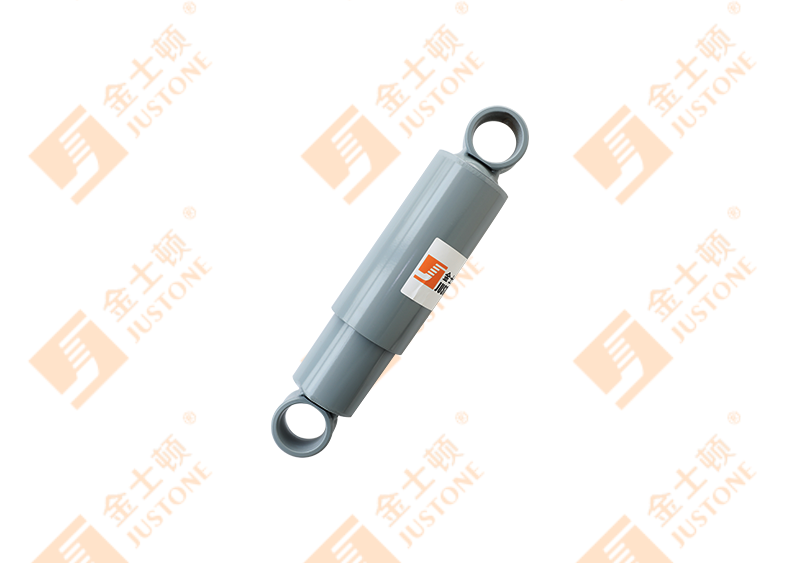
A hydraulic shock absorber is filled entirely with oil. When the piston moves, it pushes that oil through valve openings to create damping force. The design is elegantly simple: no gas pressure, no floating piston, just fluid mechanics doing the work.
That simplicity translates into a noticeably softer, more compliant ride. Because the oil must first push past small pockets of trapped air before fully pressurizing through the valve, there is a slight lag in the damping response. Engineers actually take advantage of this — the gradual buildup of resistance is what gives hydraulic shocks their characteristic smoothness, making them the original choice for luxury and classic vehicles designed with ride comfort as the top priority.
The drawback surfaces under sustained or aggressive use. When the oil heats up and begins to foam — a condition called aeration — the piston essentially starts pushing through a frothy mixture of oil and air bubbles. Air compresses; oil does not. The result is a sudden, noticeable loss of damping performance known as shock fade. On a long mountain descent or extended rough-road section, a purely hydraulic shock can become significantly less effective by the time you need it most.
Gas-charged shocks inject pressurized nitrogen into the shock body alongside the hydraulic oil. In a twin-tube design, nitrogen occupies a separate outer chamber. In a monotube design, a floating piston physically separates the nitrogen from the oil at pressures typically ranging from 100 to 360 psi.
The nitrogen serves one critical purpose: it prevents the oil from foaming. Because nitrogen is inert, dry, and far less soluble in oil than ordinary air, it actively suppresses the bubble formation that causes fade. The result is consistent damping performance across a wide range of temperatures and operating conditions — the shock responds the same on the tenth bump as it does on the first.
The trade-off is ride feel. The pre-charge pressure means the shock is always working against a slight bias force, which produces a firmer, more responsive character. That suits performance driving and heavy loads well. For a classic car or a light-duty daily commuter where softness is the goal, the stiffness can feel out of place.
Gas shocks also require tighter manufacturing tolerances and more precise sealing to contain the pressurized nitrogen, which is reflected in their higher price point compared to hydraulic equivalents.
| Factor | Hydraulic Shocks | Gas-Charged Shocks |
|---|---|---|
| Ride Comfort | Soft and smooth | Firmer, more controlled |
| Damping Response | Gradual (slight lag) | Immediate and precise |
| Fade Resistance | Moderate — susceptible under heat | High — nitrogen prevents foaming |
| Heat Dissipation | Standard | Superior (especially monotube) |
| Heavy Load Performance | Can degrade under sustained stress | Stable under heavy or variable loads |
| Cost | Lower | Higher |
| Best For | Classic vehicles, light daily use | Performance, off-road, heavy-duty |
The honest answer is: it depends on what you're asking the shock to do.
If you drive a classic or vintage car and originality matters — both in feel and in matching the engineering the chassis was designed around — hydraulic shocks are the correct choice. These vehicles were built with hydraulic damping in mind, and swapping in gas-charged units can introduce harshness that conflicts with the original suspension geometry.
If your priority is handling, load stability, or consistent performance across demanding terrain, gas-charged shocks are the clear step up. The fade resistance alone justifies the cost difference for any vehicle regularly used in challenging conditions. For trailers that see varied road surfaces and load weights, suspension shock absorbers for trailers designed with gas-charged technology offer a meaningful reliability advantage over their hydraulic counterparts.
For everyday passenger vehicles on normal roads, either type can perform adequately — the deciding factor comes down to your preferred ride character and budget.
Passenger car comparisons tell only part of the story. For heavy trucks, semi-trailers, and commercial equipment, the stakes around shock absorber performance are considerably higher. A truck hauling tens of thousands of pounds over long distances generates sustained shock cycles that would overwhelm a purely hydraulic damper within hours. The heat load alone — generated by constantly converting suspension energy into thermal energy — demands shocks that can stay consistent under prolonged stress.
This is why gas-charged technology dominates in commercial applications. Consistent damping directly affects vehicle stability, braking distances, and driver fatigue — all of which have real safety and operational cost implications. For a detailed breakdown of how this plays out in practice, see how shock absorbers function in heavy truck chassis.
Beyond the chassis itself, vibration management extends into the cab. Drivers spending long hours behind the wheel benefit significantly from well-calibrated cabin shock absorbers for commercial vehicles, which reduce the fatigue-inducing vibrations transmitted from the road through the cab structure. Meanwhile, the suspension demands on the trailer portion of a rig are equally significant — purpose-built heavy truck chassis shock absorbers are engineered to handle the dynamic load shifts and extended duty cycles that standard shocks simply are not rated for.
Choosing the right shock absorber type is not a minor detail. For a heavy-duty commercial vehicle, it is a foundational decision that affects performance, safety, and total cost of operation over the life of the equipment.
Contact us for the latest news.
Copyright @ Hangzhou Justone Industry Co., Ltd.
 OEM Commercial Vehicle Shock Absorbers Manufacturers
Wholesale Car Shock Absorbers Factory
OEM Commercial Vehicle Shock Absorbers Manufacturers
Wholesale Car Shock Absorbers Factory