English
 Deutsch
Didn't find a product that suits you?
Contact us for the latest news.

Content
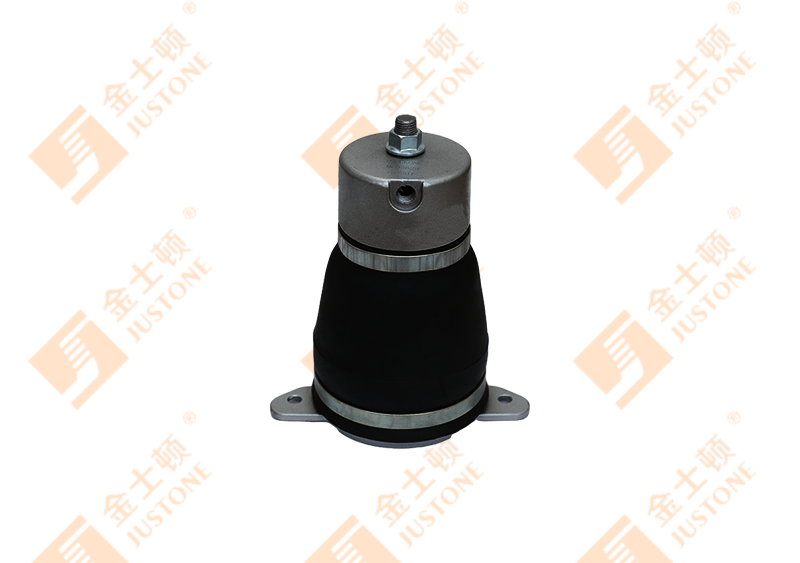
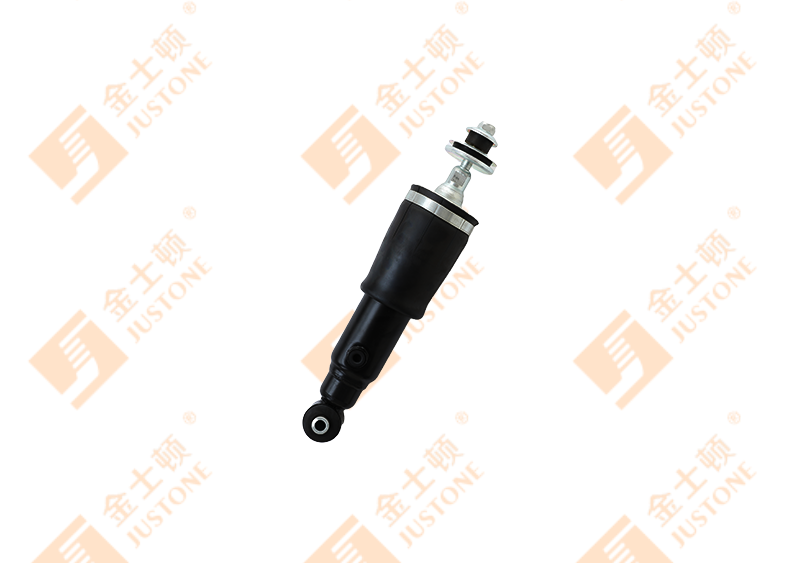
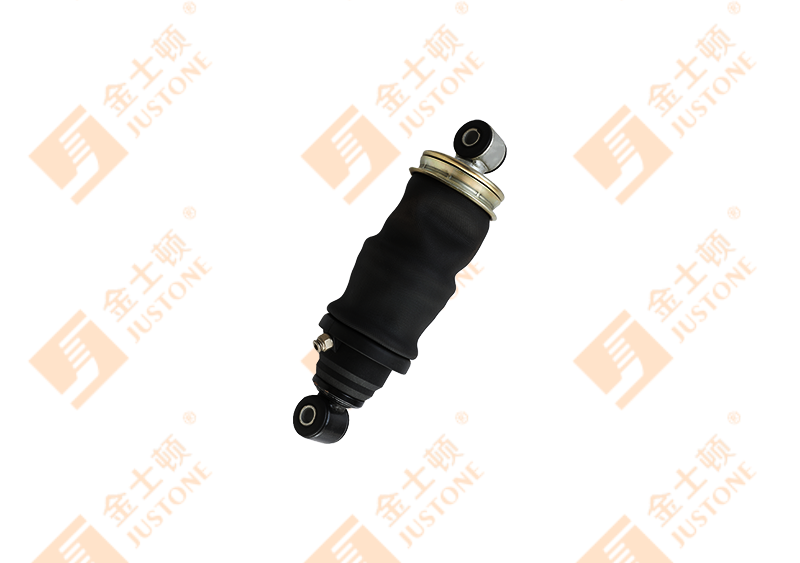
A standard shock absorber only does one job: it controls the rebound of a spring after a bump. An air shock does two jobs in a single housing. It combines a gas-filled chamber that acts as the spring with a column of hydraulic fluid that acts as the damper, letting one component both cushion the impact and control how fast it settles.
That combination is what makes air shocks adjustable in a way traditional coil or leaf springs simply aren't. Add air and the chamber stiffens and lifts; release air and it softens and lowers. For a foundational breakdown of what a shock absorber actually is, it helps to start with the basic mechanical role a damper plays before layering in the air-pressure variable.
Underneath the adjustability, an air shock still relies on the same core physics as any hydraulic damper. Inside the housing, a piston with small calibrated orifices moves through hydraulic fluid as the suspension compresses and extends. Pushing that fluid through a restriction takes work, and that work converts into heat rather than letting the spring's energy bounce the vehicle up and down unchecked.
This is the same damping principle studied in vibration mechanics more broadly, where a viscous damping element dissipates the energy of an oscillating system rather than storing it. Without that resistance, a compressed spring would keep oscillating for several cycles after every bump. With it, the motion settles in one or two, which is why the tire stays planted and the ride stays controlled.
What air shocks add on top of this is a gas chamber — usually nitrogen — that replaces or supplements a mechanical spring. Compressing that gas stores energy just like a coil spring does, but because gas pressure is adjustable, the spring rate itself becomes tunable rather than fixed.

The practical benefit of an air shock comes down to one lever: pressure. Pump more air into the chamber and two things happen at once — the shock extends, lifting ride height, and the gas becomes harder to compress further, stiffening the ride. Release air and the reverse happens: the shock settles lower and the ride softens.
This is why air shocks show up wherever load varies. A truck bed empty one trip and fully loaded the next needs a suspension that can adjust to both conditions without swapping parts. Increasing air pressure compensates for the added weight, restoring the vehicle's intended ride height and preventing the rear end from sagging under load.
While air shocks are familiar from passenger trucks and towing setups, the same principle scales into far heavier industrial equipment.
Trailers carrying variable cargo weights rely on dampers purpose-built for trailer suspension systems, where the ability to adjust firmness according to load keeps the cargo stable across empty and fully-loaded runs alike. Heavy trucks depend on a similar logic at the chassis level — how shock absorbers function specifically within heavy truck chassis systems comes down to managing far greater oscillating mass without sacrificing control.
Cabin comfort is its own application entirely. Shock absorbers engineered for the drive-down cabins of heavy vehicles isolate the driver's compartment from chassis vibration, which matters over long shifts on rough terrain. And the same damping principle extends well beyond vehicles — how shock absorbers are optimized for solar mount axial tracking systems shows how the same energy-dissipation logic protects slow-moving mechanical structures from wind-induced oscillation.
Routine inspection — checking for slow leaks, listening for clunking during compression, and confirming ride height stays consistent — catches most of these issues before they become a full failure.
Air shocks work by pairing an adjustable gas-filled spring with the same hydraulic damping principle found in any shock absorber. Change the air pressure and you change both ride height and firmness in one motion — a flexibility that scales from passenger trucks all the way up to trailers, heavy truck chassis, and industrial equipment carrying variable loads. Understanding that dual role — spring and damper working through one adjustable pressure setting — makes it much easier to diagnose problems and choose the right unit for the load it actually needs to carry.
Contact us for the latest news.
Copyright @ Hangzhou Justone Industry Co., Ltd.
 OEM Commercial Vehicle Shock Absorbers Manufacturers
Wholesale Car Shock Absorbers Factory
OEM Commercial Vehicle Shock Absorbers Manufacturers
Wholesale Car Shock Absorbers Factory