English
 Deutsch
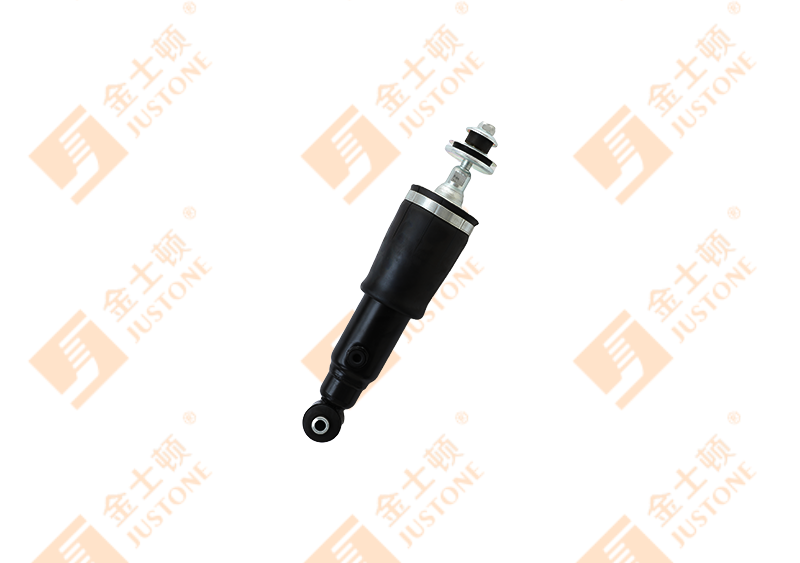
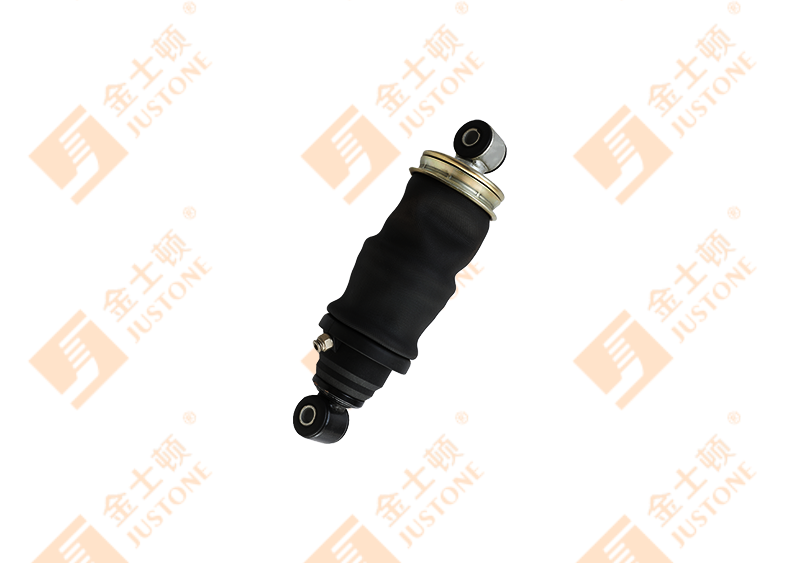
Didn't find a product that suits you?
Contact us for the latest news.

A purchasing team receives two quotes for the same heavy-truck cabin shock absorber. Both suppliers say “OEM quality.” One quote is 12% lower. The drawings match, the mounting holes match, and the sample fits the bracket. The difference appears only after 40,000 kilometers: one damper still controls cab pitch, the other has begun to fade and weep oil at the rod seal. That is why car OEM supply is not a catalogue-matching exercise. The lower piece price is irrelevant if the damping curve drifts, the change record is incomplete, or the supplier cannot show how the part was validated.
The working conclusion is simple: for shock absorbers, OEM approval is a documented performance and process claim, not a label printed on a box.
Content
OEM stands for Original Equipment Manufacturer. In everyday use it describes the company that builds the vehicle or the original part. In procurement, it means the part was released to the vehicle maker's specification and supplied through an approved production path. The term is often confused with OE. OE, or original equipment, usually refers to the part as specified for production, often sold through the vehicle maker's service channel. An OEM part may come from the same production source but carry the supplier's brand. Aftermarket parts are designed outside that approval path. The difference that matters is not the badge; it is who validated the part, who controls change, and who is accountable when performance drifts.
| Label | Common use | What the buyer should verify |
|---|---|---|
| OE | Original equipment part specified for production, often sold through dealer service. | Production drawing, vehicle maker approval, service release. |
| OEM | Part made by an original equipment manufacturer; may be supplier-branded. | Same validation file, change control, traceability. |
| Aftermarket | Independently designed or reverse-engineered replacement. | Fitment, damping curve, warranty, test data. |
| “OEM quality” | A marketing phrase, not a release status. | PPAP or PSW file, control plan, capability data, approved change notice. |
A shock absorber looks simple: tube, piston, oil, gas, seals. Its behavior is not simple. Damping force changes with piston velocity, temperature, gas charge, oil foaming, and seal friction. A chassis damper and a cabin damper may share a mounting eyelet and still need completely different valving. If a buyer approves only dimensions, the part can fit perfectly and still be wrong. The cost shows up as cab shake, tire cupping, poor roll control, driver fatigue, or a warranty claim that is hard to diagnose.
For car OEM programs, the drawing should state the damping curve at defined velocities, allowable tolerance, gas type and pressure, stroke, closed length, mounting angle, durability cycles, salt spray, operating temperature, and marking or traceability. A typical damping force tolerance might be 10% to 15%, but the exact window belongs in the specification and control plan. A verbal claim of “same as original” is not a tolerance. Nor is a bench test at room temperature enough if the part works near brake heat, road salt, and constant cyclic load.
Most commercial vehicle OEMs expect a structured launch: drawing review, sample validation, process audit, production part approval, and change control. The exact forms vary, but the logic does not. The supplier must prove that the part in volume production matches the part that was validated. IATF 16949 certification is a useful baseline because it requires a documented quality system, but the certificate alone does not prove that a specific damping curve is under control.
A supplier with in-house stamping, a controlled test laboratory, and production systems such as ERP, MES, and WMS is easier to audit because the process has fewer blind handoffs. Hangzhou Justone is one example: it has held IATF 16949 certification since 2007, operates a laboratory recognized as a provincial high-tech enterprise R&D center, and produces shock absorber stampings in-house. Those facts do not replace part-specific validation, but they reduce the chance that a critical process disappears into a subcontractor's shop.
The same word “shock absorber” covers different jobs. A heavy truck chassis damper manages wheel motion under high load and must survive heat, stone impact, and long service intervals. A cabin shock absorber isolates lower-amplitude vibration and controls cab pitch; a seat damper focuses on driver comfort; a trailer damper affects yaw stability and coupling behavior. Using one valving philosophy across all four is a false economy.
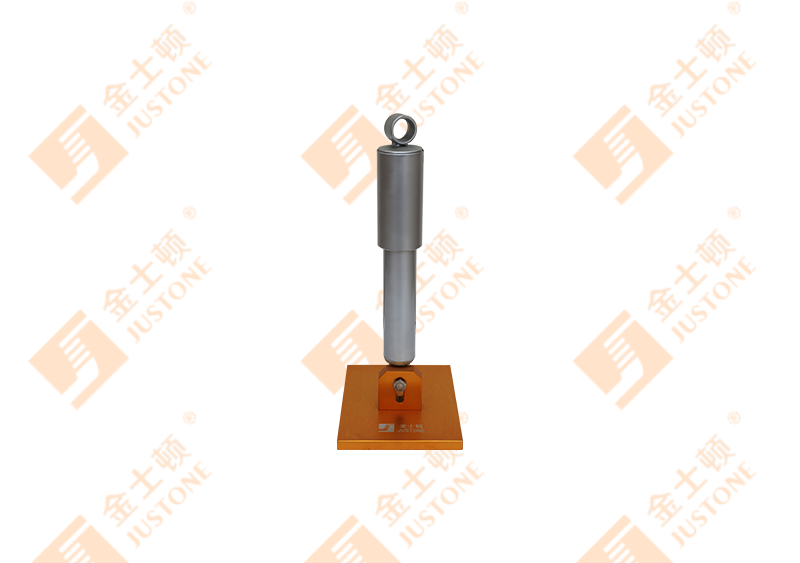 Heavy Truck Chassis Shock Absorbers for OEM ProgramsCategory for custom OEM and wholesale chassis dampers; review application fit before specifying damping curves for loaded highway cycles.View Product →
For heavy truck chassis programs, ask for damping force at both low and high piston speeds, because a curve that feels firm in a yard test may be too harsh or underdamped on a loaded highway cycle. For cabin shocks, ask for fade resistance and seal performance after continuous cycling, not just a static fit check. The mounting and orientation also matter: a damper that is correct for one cab suspension layout may be wrong for another. The site's overview of heavy truck chassis shock absorber function explains how suspension layout changes the damper's job.
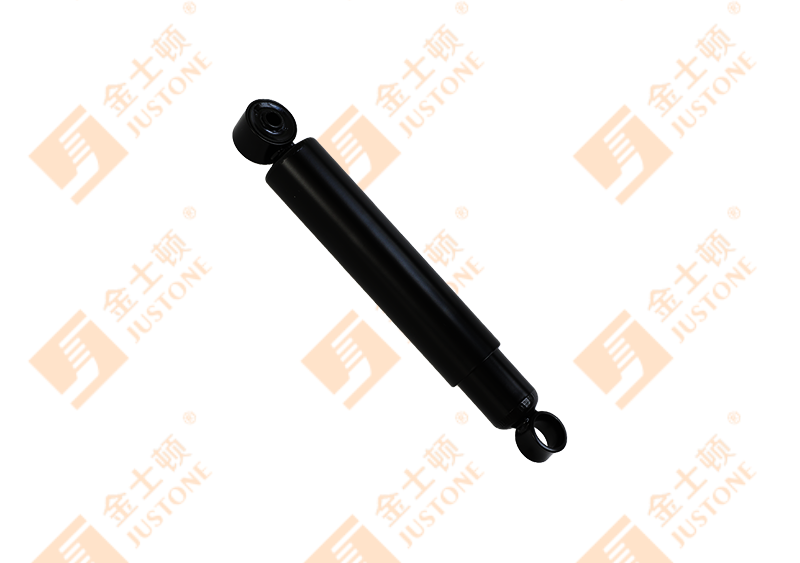
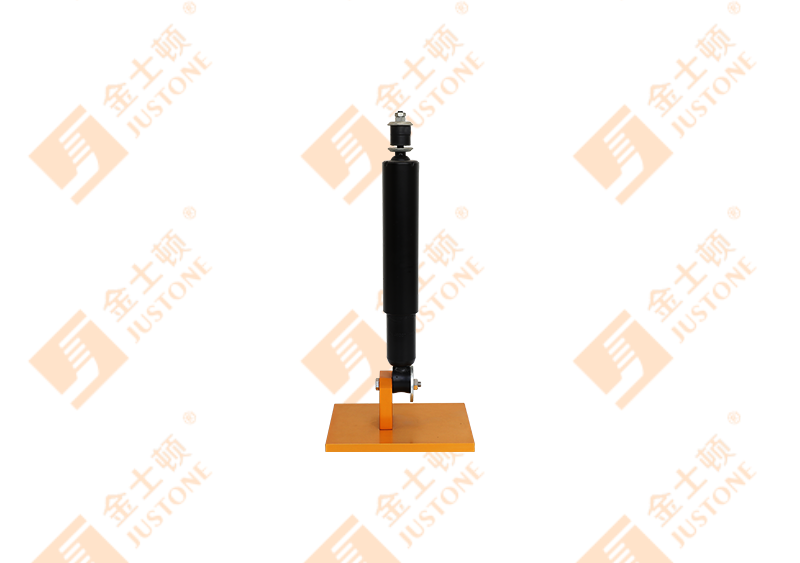 Custom Cabin Shock Absorbers for Commercial VehiclesBrowse the cabin shock category to locate detailed product information for cab suspension layouts requiring fade resistance and seal performance.View Product →
Trailer shocks and trailer dampers deserve the same discipline. A trailer coupling damper that loses control can affect stability, tire wear, and driver confidence. If the trailer program includes different load cases, the validation plan should cover them. Buyers can review the commercial vehicle shock absorber range by application before they write the RFQ.
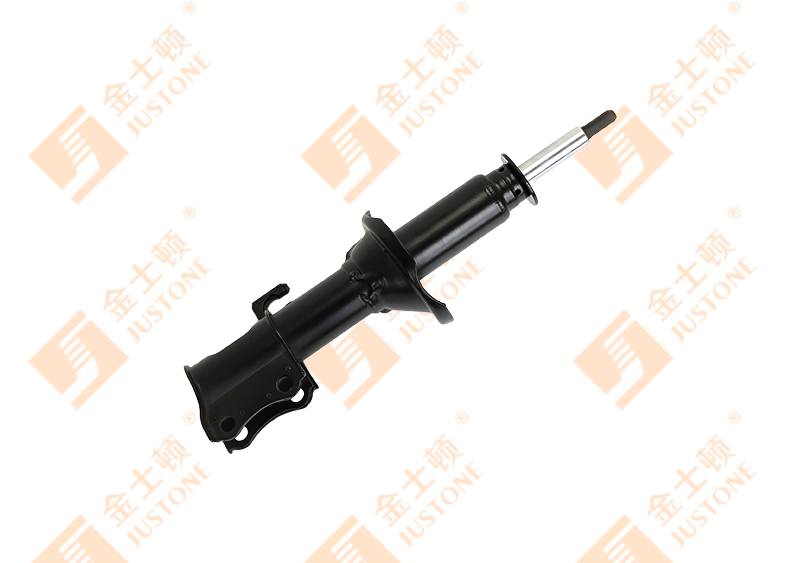
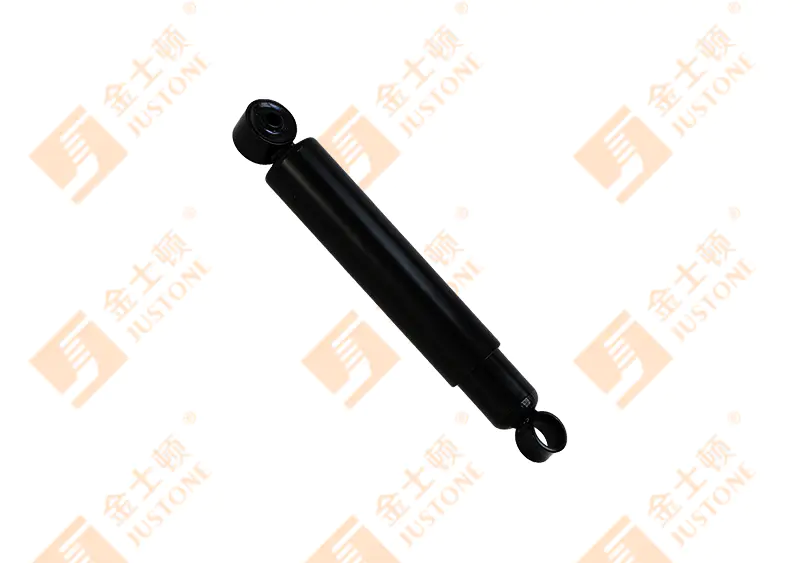 Custom OEM Suspension Shock AbsorbersCategory for custom OEM and wholesale suspension shock absorbers; use it to identify parts before evaluating validation, warranty, and total program cost.View Product →
The lowest quote often excludes the costs that follow. A car OEM shock absorber program carries validation cost, inventory risk, line-stop risk, warranty administration, and engineering time for change control. A part that is 8% cheaper per unit but causes a 0.5% warranty return rate can be more expensive than a validated part at a higher piece price. The calculation should include freight, packaging, tooling amortization, inspection, and the cost of a change that was not disclosed.
Buyers should also separate price from capacity. A supplier that can make a good sample but cannot repeat it at 400,000 units per year is not an OEM supplier for that program. Ask for annual capacity, peak capacity, lot traceability, and the plan for a second shift. Hangzhou Justone reports annual output of more than 4 million shock absorbers and supply to nearly 20 domestic and international OEMs. Those numbers are useful context, but the buyer should still map them to the specific part, line, and delivery window.
A qualification visit should test the system behind the sample. Start with the scope of the IATF 16949 certificate and confirm that the product family is covered. Then ask for the control plan for the part, the latest process audit, the test lab's calibration records, and the change log. If a critical operation such as stamping, welding, or surface treatment is outsourced, ask how the supplier controls it. A supplier that stamps its own components has more control over dimensional variation, but it still needs a documented inspection plan.
Car OEM sourcing works best when the buyer treats “OEM” as a file to audit, not a word to trust. Match the part to its application, put the damping and process requirements on paper, and verify that the supplier can repeat the validated part in volume. That is how a low quote becomes a low-risk program.
Contact us for the latest news.
Copyright @ Hangzhou Justone Industry Co., Ltd.
 OEM Commercial Vehicle Shock Absorbers Manufacturers
Wholesale Car Shock Absorbers Factory