English
 Deutsch

Didn't find a product that suits you?
Contact us for the latest news.

A rock-hard brake pedal after the engine starts, or a pedal that needs both feet to stop a loaded truck, usually means one thing: the power assist has dropped out. The brakes may still work, but the driver is now supplying the force that the booster or air system normally supplies. That is why the causes of a hard brake pedal are best approached as an assist problem first and a hydraulic or air-brake problem second.
The practical consequence is simple. A stiff pedal with a normal fluid level and no pulling is often cheaper to fix than it feels, while a hard pedal that comes with drag, a warning light, or longer stopping distance is a safety issue that should not be driven on.
Content
On a vacuum-assisted car or light truck, a hard pedal almost always traces to the booster, its vacuum supply, or the check valve between them. The booster uses engine vacuum to multiply pedal force. When that vacuum is lost, the pedal stays high and firm because the rear chamber is no longer helping.
The quickest check is a booster hold test. With the engine off, pump the brake pedal several times to exhaust stored vacuum, hold the pedal down, and start the engine. The pedal should sink slightly as vacuum builds. If it stays hard, test vacuum at the booster, inspect the check valve, and check the hose and grommet before replacing the booster.
A hard pedal is different from a low, sinking pedal. A sinking pedal points toward a fluid leak or a failing master cylinder. A hard pedal with short travel points toward assist loss or a restriction. That is also why the brake pedal is hard to push but may not feel spongy.
The most common single cause is a vacuum leak. A cracked hose, a loose grommet at the booster, a split diaphragm inside the booster, or a check valve stuck closed can all keep vacuum from reaching the chamber. A hiss under the dash or in the engine bay when the pedal is pressed is a useful clue, though not every leak is audible.
Diesel engines and some gasoline engines use a separate vacuum pump, and a worn pump can produce a hard pedal only at idle, only when cold, or only after several brake applications. Test with a gauge at the booster rather than guessing from sound. On turbocharged engines, a check valve is especially important because intake pressure changes can push vacuum the wrong way.
Do not overlook check valve orientation. A valve installed backward can seal vacuum in the booster for one application and then leave the next press hard. Replace it with the correct part for the vehicle, not a generic one-way valve.
When boost is present, the next suspects are hydraulic restriction and mechanical drag. A collapsed flexible brake hose can act like a one-way valve, a sticking caliper piston or slide can keep a pad against the rotor, and a parking brake that does not fully release can leave the pedal short and firm. After a drive, compare wheel temperatures; a much hotter wheel points to drag.
Contaminated fluid and a blocked compensation port can also produce a high, hard pedal. So can an incorrectly adjusted pushrod or a master cylinder that was replaced without the correct bench bleed. A failed master cylinder more often gives a low pedal, so do not replace it solely because the pedal is stiff.
On ABS-equipped vehicles, scan for codes and check for a stuck isolation valve before condemning hard parts. A restricted brake line or a collapsed hose is usually confirmed by a pressure test and a close visual inspection.
A heavy truck may use vacuum-assisted hydraulic brakes, air-over-hydraulic brakes, or a full-air system. In a full-air system, a hard pedal is not a vacuum problem. Look at air pressure build-up, the treadle valve, brake chambers, slack adjusters, relay valves, and ABS faults. A low-pressure warning plus a hard pedal means the vehicle should be parked, not road-tested.
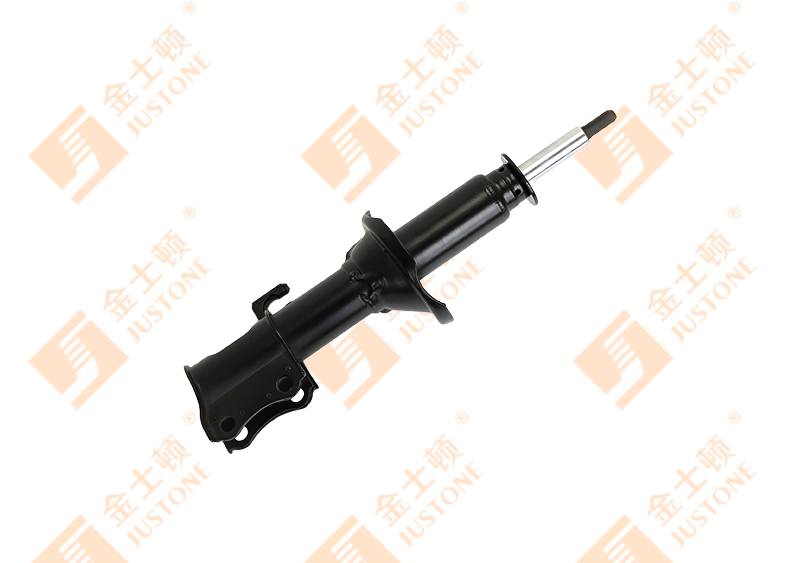
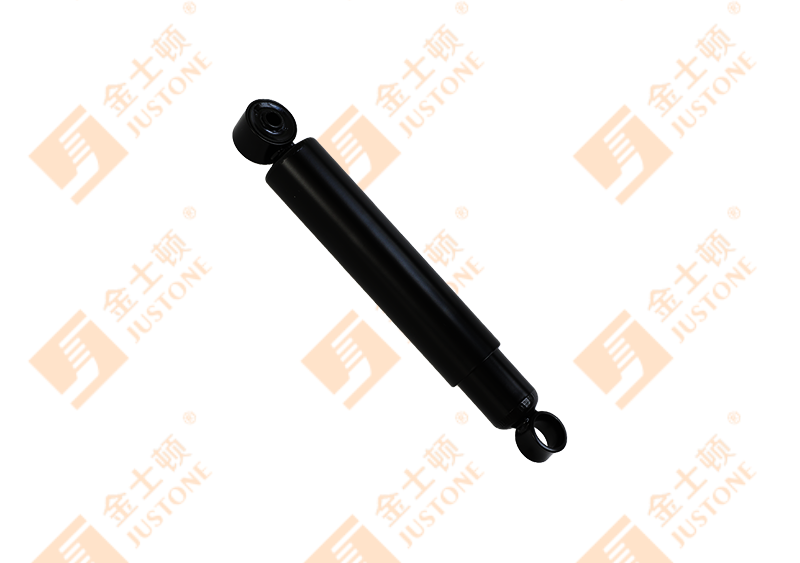
Chassis condition does not create boost, but it changes how safely the driver can use the pedal. Worn dampers increase weight transfer and make brake modulation less predictable, especially with a loaded trailer. For a closer look at how damping and suspension work together, see how shock absorbers function in heavy truck chassis. Fleets that specify chassis components separately can review heavy truck chassis shock options without mixing them into a brake diagnosis.
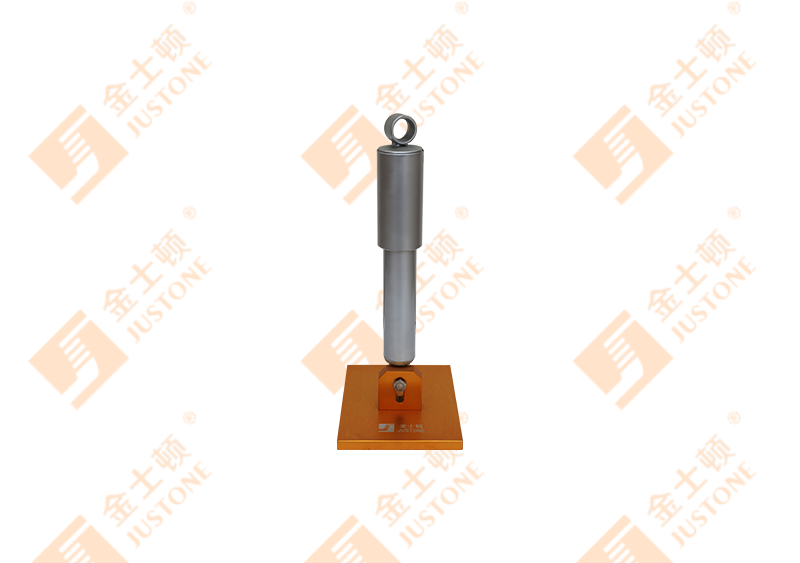 Heavy Truck Chassis Shock Absorbers ManufacturersHangzhou JUSTONE Industry Co., Ltd was established in 2000View Product →
Keep the logic separate: a shock absorber can improve control and tire contact, but it cannot restore vacuum assist or air pressure.
Start with the cheapest observation: does the pedal change when the engine starts? Then match the symptom to the system.
| Pedal behavior | First area to check | What to verify |
|---|---|---|
| Hard after start, no sink | Vacuum supply or booster | Hose, check valve, grommet, booster hold test |
| Hiss when pressed | Booster or valve | Diaphragm, seal, check valve direction |
| Hard at idle, better off idle | Vacuum pump or leak | Gauge reading at booster, pump output |
| Hard plus one hot wheel | Caliper, hose, or park brake | Wheel temperature, hose condition, release |
| Hard after fluid service | Bleeding or contamination | Fluid condition, air in lines, compensation port |
| Low-air warning on a truck | Air system | Compressor, governor, dryer, leaks, chamber stroke |
A parts cannon approach is costly here because a booster, master cylinder, and ABS valve can all produce pedal complaints that feel similar from the driver's seat. Confirm the system that is failing before buying the part.
Stop driving if the pedal is hard and stopping distance has increased, the fluid level is dropping, a red brake warning light is on, the vehicle pulls under braking, or a wheel is smoking or unusually hot. A hard pedal with normal stopping distance at high effort still deserves prompt service, because the reserve margin is already reduced.
Do not pump a hard pedal repeatedly in traffic hoping it will recover. If assist returns only briefly, the fault is still present. Have the vehicle towed or repaired in place, especially if it is a commercial vehicle carrying passengers or freight.
Replace brake fluid on the manufacturer's interval, inspect flexible hoses at every brake service, and test the vacuum pump and check valve when the engine is serviced. On air-braked trucks, drain the air tanks and service the dryer; moisture and oil carryover can damage valves and create a stiff or slow pedal. After any hydraulic repair, bleed the system fully and verify pedal height and feel before the vehicle returns to service.
Most hard-pedal problems are found with a gauge, a visual inspection, and a logical test sequence. The repair is often simple, but only after the assist, hydraulic, and air systems have been separated correctly.
Contact us for the latest news.
Copyright @ Hangzhou Justone Industry Co., Ltd.
 OEM Commercial Vehicle Shock Absorbers Manufacturers
Wholesale Car Shock Absorbers Factory