English
 Deutsch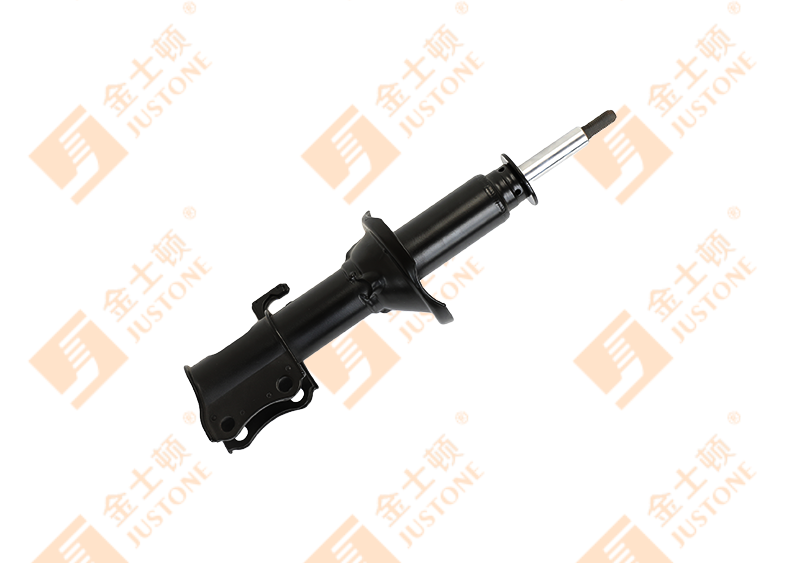
Didn't find a product that suits you?
Contact us for the latest news.

Content
Shocks and suspension are not the same thing — but the confusion is understandable. In everyday conversation, people use "shocks" as a shorthand for the entire system that softens your ride. In reality, shock absorbers are a single component within a much larger assembly known as the suspension system.
Think of it this way: the suspension system is the full team, and the shock absorber is one of its most important players. You cannot replace the team with one player — and understanding the difference matters whether you are a driver noticing a rougher ride, a fleet manager evaluating maintenance schedules, or an engineer sourcing components for commercial vehicles.
The stakes are significant. According to Fortune Business Insights, the global automotive suspension system market was valued at USD 49.70 billion in 2025 and is projected to reach USD 107.12 billion by 2034 — a clear signal of how central suspension engineering has become to vehicle performance, safety, and comfort across every segment from passenger cars to heavy commercial equipment.
The suspension system is the complete mechanical network that connects a vehicle's wheels and axles to its frame or chassis. Its job is threefold: support the weight of the vehicle, absorb energy from road irregularities, and keep the tires in firm contact with the ground at all times. Lose any one of those three functions and vehicle handling, braking, and safety all deteriorate rapidly.
A typical suspension system is made up of several distinct components, each handling a specific part of the job:
Remove any of these elements and the system cannot function as designed. The suspension works as an integrated assembly — which is why identifying the true source of a handling problem often requires inspecting multiple components, not just the shock absorbers alone.
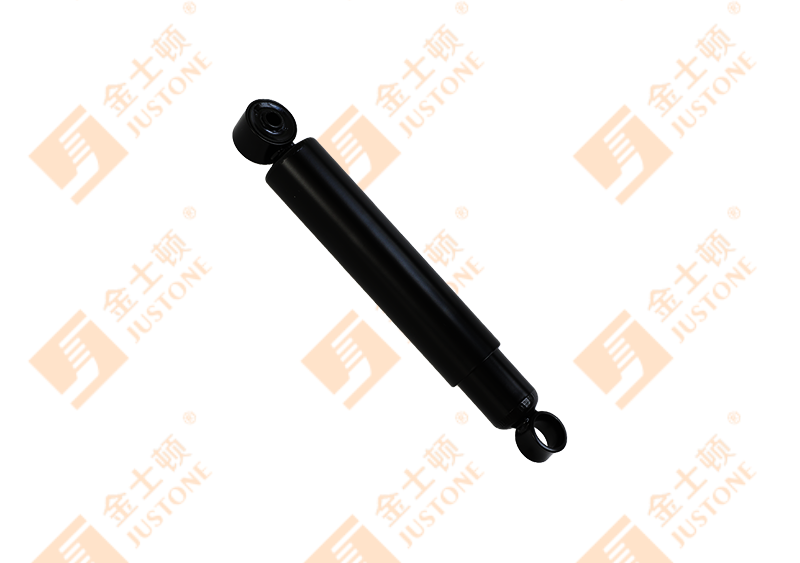
Shock absorbers — often called dampers in engineering contexts — have one primary job: control spring movement. When a wheel hits a bump, the spring compresses rapidly, absorbing the impact. Without intervention, that stored energy would release immediately and send the wheel bouncing back up with equal force, causing the vehicle to pitch, bounce, and become difficult to control. The shock absorber prevents this by converting the kinetic energy of that rebound into heat, which dissipates through hydraulic fluid inside the damper body.
Inside a conventional shock absorber, a piston moves through oil-filled chambers as the suspension compresses and extends. Small valves in the piston regulate the flow of hydraulic fluid between chambers, creating resistance that slows the spring's movement. The resistance is not constant — most modern shock absorbers are velocity-sensitive, meaning the faster the suspension moves, the greater the damping force the shock generates. This allows the suspension to respond gently to minor surface imperfections and aggressively to sudden, large impacts without requiring manual adjustment.
The practical result is a vehicle that feels planted rather than floaty, that steers predictably through corners rather than wallowing, and that maintains consistent tire contact with the road rather than skipping over bumps. For a detailed breakdown of shock absorber mechanics, see our article on what a shock absorber is and how it works.
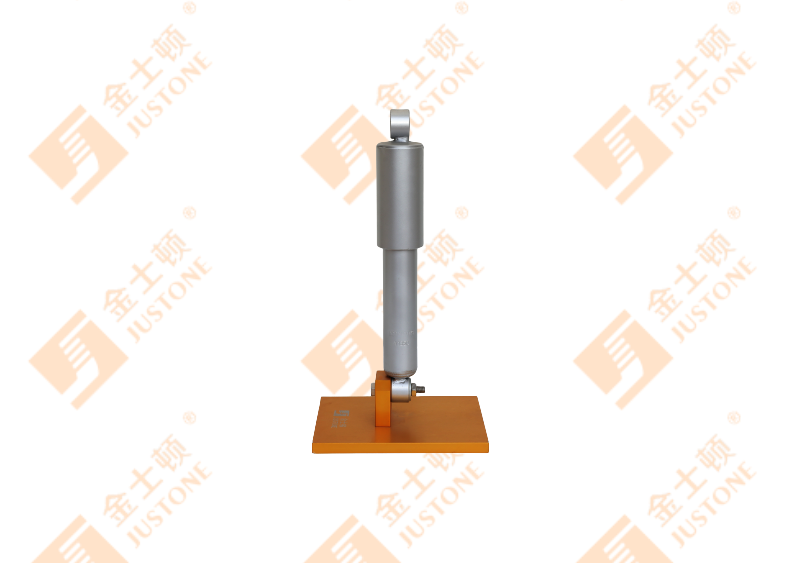
Adding to the terminology tangle is another frequently confused pair: shocks and struts. Both are damping devices, but they differ significantly in structure and role within the suspension system.
| Feature | Shock Absorber | Strut |
|---|---|---|
| Structural role | Standalone damping component only | Structural member of the chassis and suspension |
| Weight bearing | Does not support vehicle weight | Bears vehicle weight as part of its assembly |
| Spring | Separate, independently mounted spring | Coil spring typically integrated into the strut assembly |
| Replaceability | Can be replaced without affecting wheel alignment | Replacement may require wheel realignment |
| Common application | Rear suspension on many vehicles; heavy-duty and commercial use | Front suspension on most modern passenger cars |
A shock absorber is an individual suspension component attached alongside a separately mounted spring — it damps movement but does not hold anything up. A strut, by contrast, combines damping and structural support in a single unit, often integrating the coil spring directly. This makes struts more compact but also more central to the vehicle's geometry, meaning a worn strut can affect steering alignment in ways a worn shock absorber typically does not.
A vehicle will use one or the other at each corner — never both. Which design your vehicle uses depends on the manufacturer's suspension architecture for that specific axle and model. Most modern passenger cars use struts at the front and shocks at the rear; trucks, commercial vehicles, and specialized equipment more frequently rely on standalone shock absorbers paired with heavy-duty leaf or coil springs.
The relationship between shocks and suspension becomes even more critical — and more complex — in heavy-duty commercial and industrial applications. A passenger car shock absorber manages the weight of a 1,500 kg vehicle over typical road surfaces. A shock absorber on a heavy truck chassis manages dynamic loads many times greater, across terrain that includes construction sites, logging roads, and unpaved industrial routes.
Understanding the suspension system's role in a heavy truck chassis reveals a much more demanding engineering context. In these vehicles, the suspension does not just improve comfort — it protects the chassis from fatigue cracking, prevents cargo from shifting under dynamic loads, and keeps axles aligned under the extreme lateral and vertical forces that commercial operation generates. The way shock absorbers function in heavy truck chassis involves significantly higher damping force ratings, reinforced mounting systems, and often gas-charged or multi-stage valve designs built for extended duty cycles.
Industrial and commercial applications extend well beyond the truck chassis itself:
In each of these contexts, the core principle remains unchanged: the shock absorber is a precision damping component operating within a larger suspension system. The system defines the envelope of possible movement; the shock absorber controls what happens within it.
Because shocks and suspension components wear gradually, drivers and fleet operators often adapt to declining performance without realizing how far ride quality and safety have deteriorated. Knowing what to look for allows problems to be caught early — before minor wear becomes a safety liability or an expensive multi-component failure.
For commercial vehicles, heavy trucks, and industrial equipment, the threshold for action should be lower than for passenger cars. The consequences of suspension failure under load — loss of directional control, trailer instability, cab vibration beyond safe exposure limits — are more severe, and proactive replacement scheduling is far less costly than reactive repair after a failure event.
Contact us for the latest news.
Copyright @ Hangzhou Justone Industry Co., Ltd.
 OEM Commercial Vehicle Shock Absorbers Manufacturers
Wholesale Car Shock Absorbers Factory
OEM Commercial Vehicle Shock Absorbers Manufacturers
Wholesale Car Shock Absorbers Factory