English
 Deutsch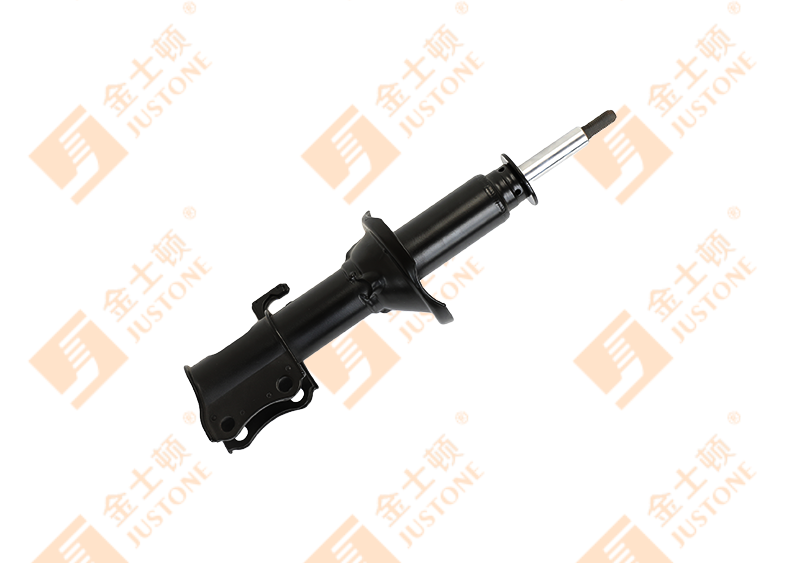
Didn't find a product that suits you?
Contact us for the latest news.

An OEM suspension engineer signs off a damper drawing in the morning. By the afternoon, the same part is sitting in a cold chamber at minus 40 degrees Celsius while a shaker rig pushes it toward a million cycles. That gap between an approved drawing and dependable evidence is where automotive research and development actually lives. In commercial vehicle damping, programs are rarely won by the cleverest concept on a slide. They are won by parts that hold the same force curve on unit one and on unit four hundred thousand.
So the conclusion comes before the reasoning: R&D value in shock absorbers is built on validated, repeatable performance and on the manufacturing discipline that keeps it repeatable, not on novelty for its own sake.
Content
Ask ten people what R&D means and most will describe invention. In vehicle engineering, the daily output looks different. Development teams deliver three things that a purchasing department can audit, and each of them is measurable.
Automotive manufacturers and their suppliers rank among the largest corporate investors in research and development worldwide, and most of that spending flows into durability engineering, materials, software and manufacturing capability rather than into visible styling. For a component supplier, that money arrives as hard requirements: a force curve, a corrosion cycle count, a mounting envelope and a delivery window. Meeting them is the job.
A damper program normally passes through five gates before it reaches a truck assembly line. Each gate exists to kill weak designs early, when a change costs a drawing revision instead of a tooling rebuild.
| Gate | Main question asked | Evidence normally produced |
|---|---|---|
| A-sample or concept | Does the concept fit the vehicle envelope and hit the target force curve? | CAD models, first force-velocity curves, bench fitment checks |
| B-sample, design validation | Can the design survive the specified environment? | Durability rig results, salt spray and temperature cycling, oil and gas charge specification |
| C-sample, process validation | Can the production line repeat the validated design? | Capability studies on force testing, control plans, PPAP documentation |
| Pilot lot | Do tooling, stamping and assembly behave at rate? | Run-at-rate output, first-pass yield, measurement system analysis |
| SOP and field monitoring | Does real service match the laboratory? | Warranty tracking, returned-part teardown, design change records |
Any gate can send a program back a step, and that is the point. A supplier that never returns to an earlier gate is usually not testing hard enough, or not reporting honestly.
Two suppliers can quote the same target force and still build very different vehicles. What separates them is how tightly they control the variables around that target.
A ten percent force band sounds generous until it is applied across a temperature range, a spread of road inputs and a million cycles. Programs that fail usually fail at the edges: the coldest morning, the worst road surface, the last tenth of the tolerance window, the hundred thousandth kilometre.
Certification alone proves little, but the pattern behind it is informative. Hangzhou Justone Industry Co., Ltd, which also appears under the name Zhejiang Menre Shock Absorber Manufacture Co., Ltd, has built its development work inside its own plant rather than in a separated skunkworks. The company dates back to 2000, has held IATF 16949 certification since 2007, was recognised as a national high-tech enterprise in 2015, had its laboratory designated a provincial-level high-tech enterprise R&D centre in 2016, and was listed as a Hangzhou pilot demonstration enterprise for factory IoT and industrial internet in 2018. Its stated output exceeds four million dampers a year against annual sales close to RMB 200 million, supplying roughly twenty commercial vehicle OEMs at home and abroad.
One detail matters more than the badge list: the company stamps its own damper components. Vertical integration from stamping to finished damper assembly shortens the loop between a design change and a physical part, and that loop is exactly what slows research programmes down. For a closer look at the chassis side of this work, read how shock absorbers function in a heavy truck chassis.
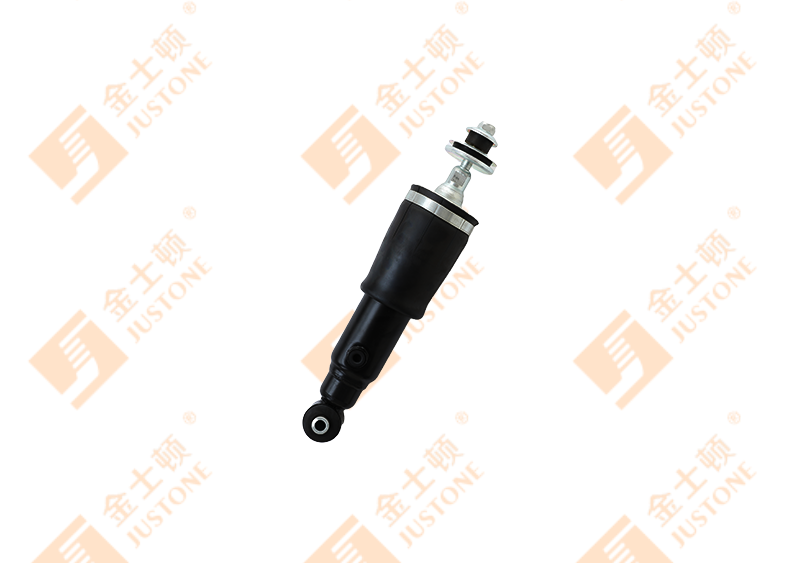
 Heavy Truck Chassis Shock Absorbers for Custom OEM SupplyCategory for custom/OEM heavy truck chassis shock absorbers, with replacement interval and suspension upgrade guidance for commercial vehicle applications.View Product →
Information systems are usually filed under operations, yet they shape what a development team can actually prove. An ERP system ties a part number to its revision history. An MES layer records which press, which torque setting and which batch produced a given damper. A WMS records how long a seal kit sat on a shelf before it was fitted.
When a customer asks how you know that unit four hundred thousand behaves like unit one, the honest answer is not a confident sentence. It is a traceable record. Factories that invest in MES and warehouse management usually see their development cycle shorten as a side effect, because prototype builds, pilot runs and design changes all move through the same documented channel instead of through email and memory.
Heavy truck chassis dampers get the attention, but the parts a driver notices most sit elsewhere. Cabin shocks control the pitching and rolling of the cab on its mounts, while seat dampers handle a much smaller mass at a much higher frequency. Both are specified inside a narrow comfort band, and both depend on low-friction seals, a stable gas charge and consistent rubber compounds.
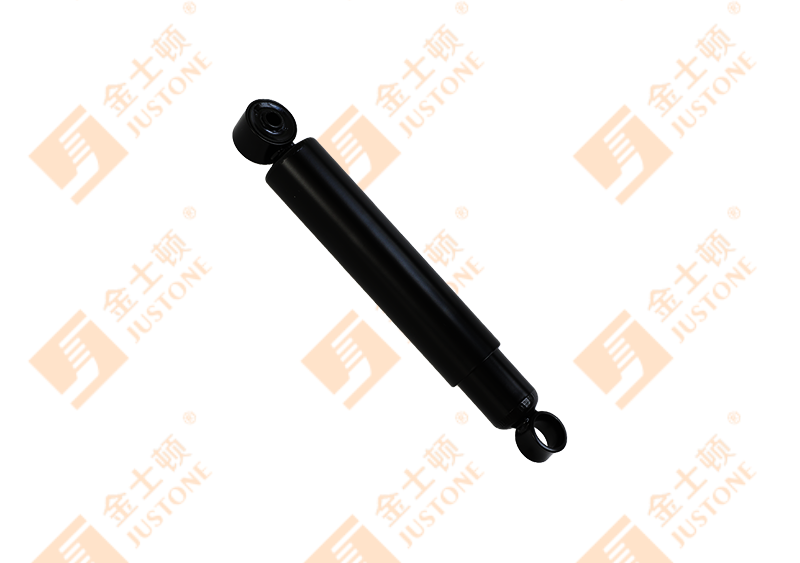
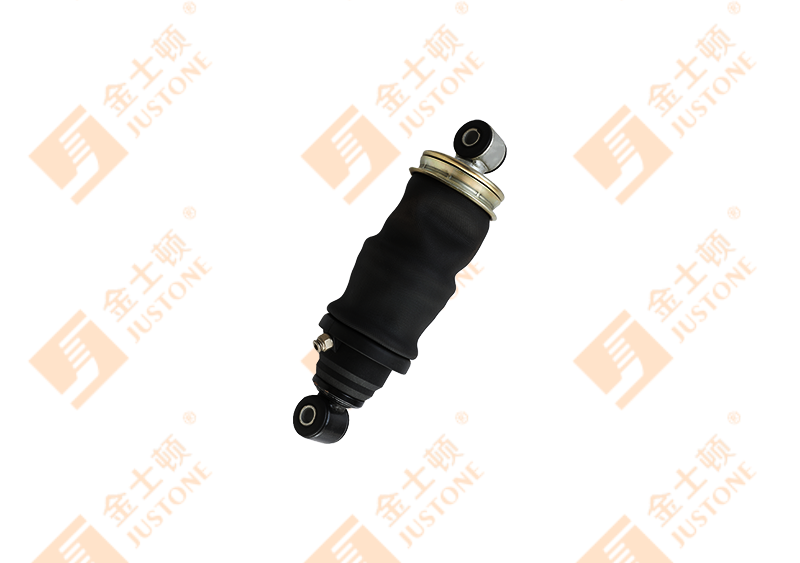
 Custom OEM Cabin Shock Absorbers and Cab DampersBrowse custom OEM cabin shock absorbers and cab dampers from a commercial vehicle shock absorber manufacturer serving wholesale supply.View Product →
Trailer shocks and trailer coupling dampers work on a different duty cycle: long stretches of steady travel interrupted by hard events such as potholes, braking in a bend and crosswinds. Development here is about keeping yaw behaviour predictable when the load is uneven, which is why field returns rather than bench data often decide the next revision.
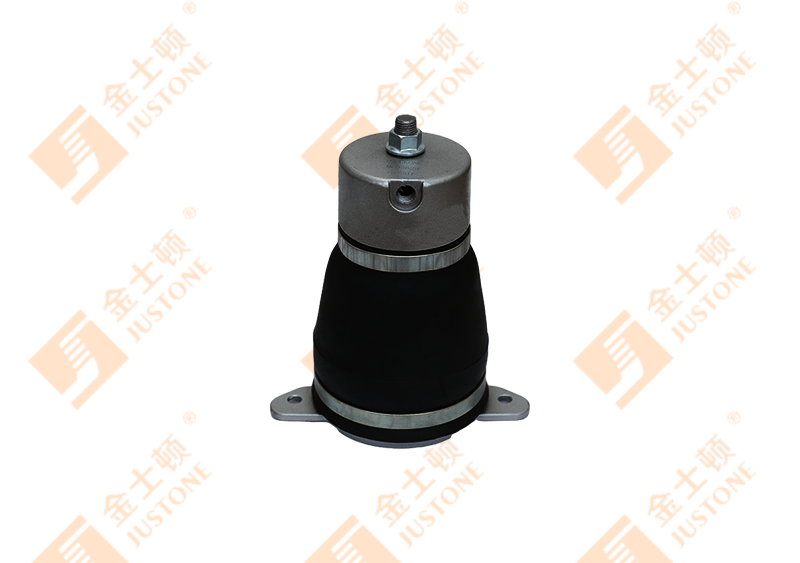
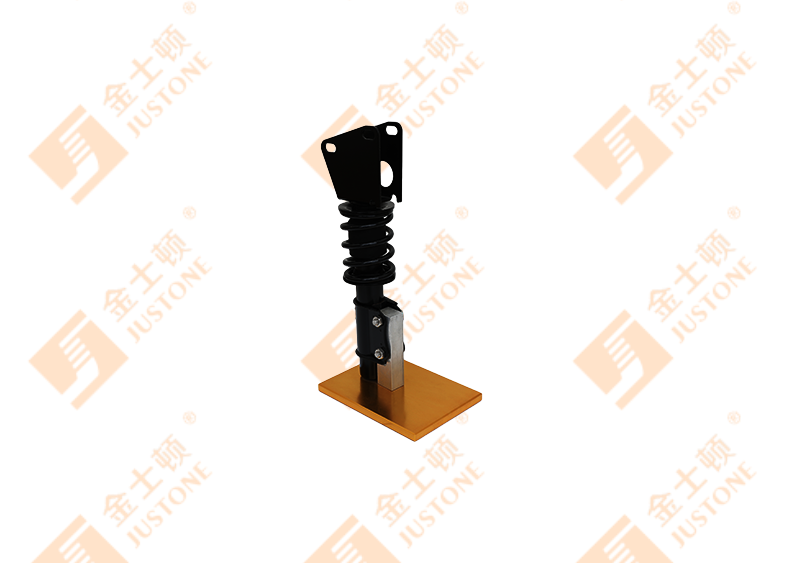
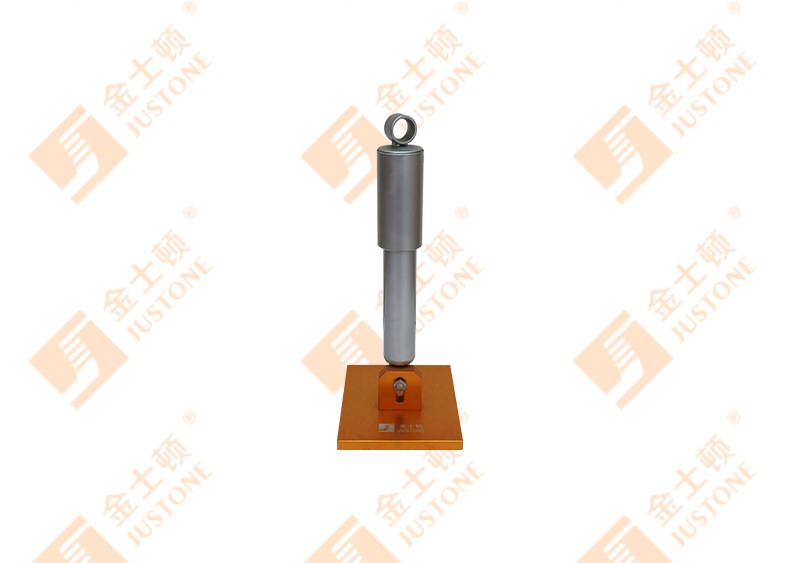
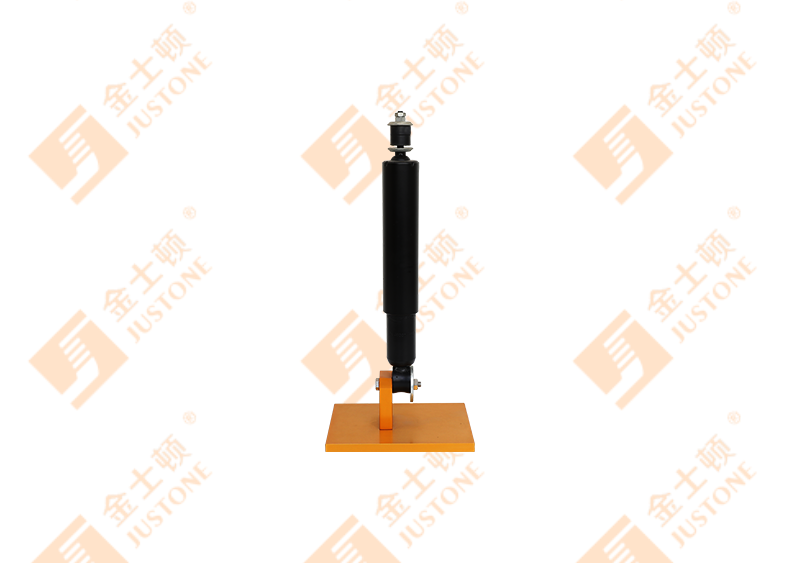
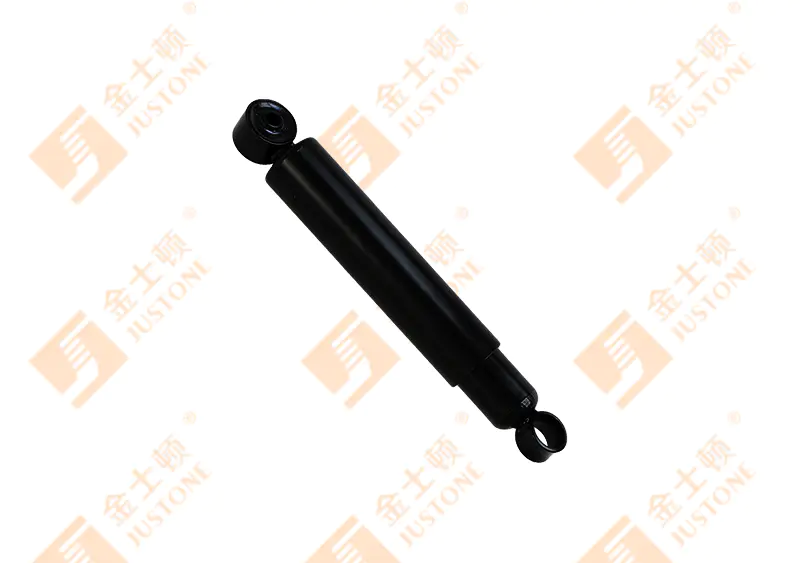 Custom Suspension Shock Absorbers and Related Damper CategoriesCategory for custom suspension shock absorbers, with related damper navigation covering cabin, trailer, seat and heavy truck applications.View Product →
The same approach transfers to ATV dampers, which trade comfort for wheel travel and heat resistance in dusty conditions, and to dampers used on solar mount axial trackers, where a tracker must hold position against wind gusts for years with almost no maintenance. Different duty cycles, identical development questions: what is the load, how often does it repeat, and what evidence shows the part still meets specification at the end of the warranty period?
A plant tour shows you machines. A short technical meeting shows you whether the engineering behind them is real. Six questions do most of the work.
A supplier that answers with documents rather than adjectives is usually the one that still keeps its promises two years after the nomination letter.
Automotive research and development is not a department or a poster on a wall. It is the chain that connects a force curve on a screen to a truck that still rides properly at eight hundred thousand kilometres, and it only holds if every link is tested, documented and repeatable. Buyers who treat that chain rather than the presentation as the product tend to collect far fewer surprises, and suppliers organised around commercial vehicle shock absorber manufacturing are built to shorten it.
Contact us for the latest news.
Copyright @ Hangzhou Justone Industry Co., Ltd.
 OEM Commercial Vehicle Shock Absorbers Manufacturers
Wholesale Car Shock Absorbers Factory
OEM Commercial Vehicle Shock Absorbers Manufacturers
Wholesale Car Shock Absorbers Factory