English
 Deutsch
Didn't find a product that suits you?
Contact us for the latest news.

Content
Heavy truck chassis shock absorbers are not merely comfort components; they are vital safety systems that maintain tire contact with the road, ensure braking efficiency, and protect valuable cargo from vibration damage. Effective damping reduces stopping distances by up to 15% on uneven surfaces by preventing wheel bounce and maintaining traction.
Unlike passenger vehicles, heavy-duty trucks operate under extreme loads and varying terrain conditions. The shock absorbers must manage kinetic energy from massive sprung weights, often exceeding 20 tons. Failure to maintain these components can lead to accelerated wear on tires, suspension bushings, and even structural fatigue in the chassis frame itself.
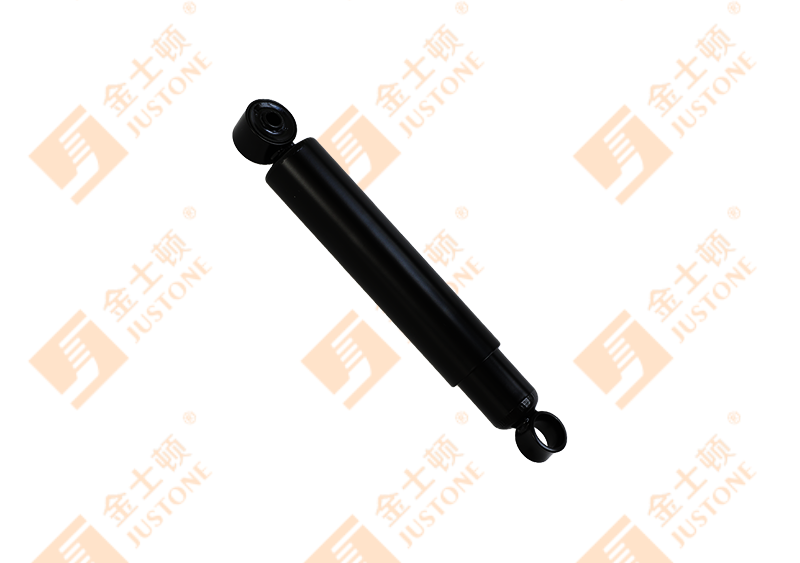
Twin-tube shocks are the most common type found in standard heavy trucks. They consist of an inner working tube and an outer reserve tube. This design is cost-effective and provides a good balance between comfort and load handling. However, they are prone to foaming under continuous heavy use, which can lead to fade and reduced performance.
For severe duty applications, mono-tube shocks offer superior performance. They use a single tube with a floating piston separated by high-pressure nitrogen gas. This design prevents oil aeration and foaming, ensuring consistent damping force even under extreme heat and load. Mono-tube shocks can dissipate heat 30% more efficiently than twin-tube variants.
Modern fleets increasingly adopt adjustable shock absorbers that allow drivers or fleet managers to tune damping rates based on load weight. Semi-active systems use sensors to automatically adjust valve settings in real-time, optimizing ride quality and stability. While more expensive, these systems can extend tire life by 10-20% through better weight distribution.
| Type | Performance | Heat Dissipation | Cost | Best Application |
|---|---|---|---|---|
| Twin-Tube | Standard | Moderate | Low | Regional Haul |
| Mono-Tube | High | Excellent | Medium-High | Long Haul/Heavy Load |
| Adjustable | Variable | Good | High | Mixed Fleet/Varying Loads |
The most obvious sign of failure is hydraulic fluid leaking from the seal area. A thin film of oil is normal due to lubrication, but dripping or wet streaks indicate seal failure. Additionally, inspect the mounting brackets and bushings for cracks or excessive wear, which can cause clunking noises during operation.
Worn shocks allow wheels to bounce, leading to cupping or scalloping on tire treads. This irregular wear pattern reduces tire lifespan significantly and increases the risk of blowouts. If tires show uneven wear despite proper alignment, shock absorbers should be the first component inspected.
Drivers may notice increased body roll during cornering, nose-diving during braking, or squatting during acceleration. These symptoms indicate that the shocks are no longer controlling spring movement effectively. In emergency situations, this loss of control can be catastrophic, especially for loaded trucks.
Fleet managers should include shock absorber checks in every preventive maintenance service. Visual inspections for leaks and physical damage should occur every 10,000 miles. A more thorough bounce test or professional diagnostic check is recommended every 50,000 miles or annually, whichever comes first.
Investing in high-quality shock absorbers and maintaining them properly reduces total cost of ownership. By protecting tires, suspension components, and cargo, effective damping minimizes unexpected downtime and repair costs. Fleets report that proactive shock maintenance can reduce suspension-related repairs by 25% annually.
Contact us for the latest news.
Copyright @ Hangzhou Justone Industry Co., Ltd.
 OEM Commercial Vehicle Shock Absorbers Manufacturers
Wholesale Car Shock Absorbers Factory
OEM Commercial Vehicle Shock Absorbers Manufacturers
Wholesale Car Shock Absorbers Factory