English
 Deutsch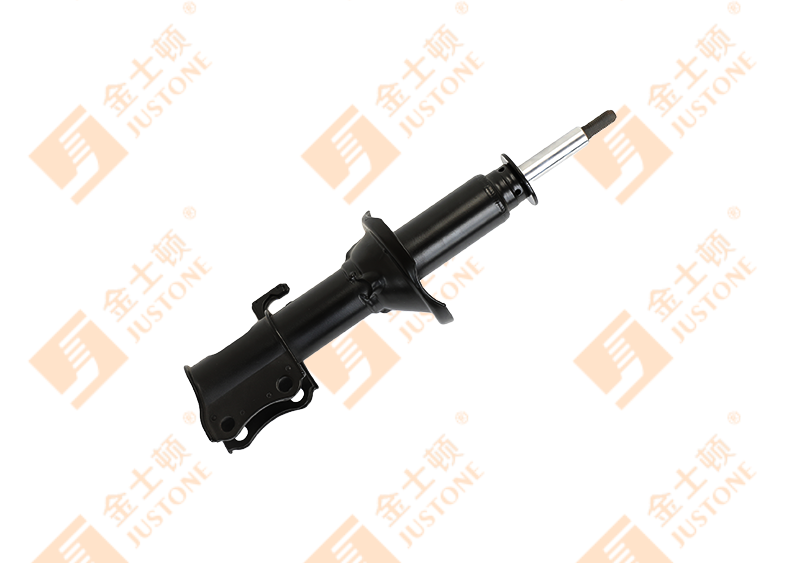
Didn't find a product that suits you?
Contact us for the latest news.

A truck returns from a 600-mile route with the inside edge of the left front tire feathered. The driver has been reporting a floaty feeling at highway speed for weeks, and the maintenance log shows new steering parts fitted only 10,000 miles ago. The instinctive response is to order more replacement parts. The effective response is to tune the suspension as a system.
Suspension tuning means matching spring rate, damping characteristics, and geometry to the loads and conditions a vehicle actually encounters. On a race car the target is lap time. On a commercial vehicle the targets are directional stability, even tire wear, load protection, and driver comfort. The physics is identical; the priorities are not. If only one idea sticks, let it be this: most handling complaints that look like component failures are really mismatches between the springs, the dampers, and the weight the vehicle carries.
Content
Every adjustment in suspension tuning exists to control one thing: weight transfer. When a vehicle brakes, accelerates, or corners, load shifts between axles and between the left and right wheels of an axle. The suspension manages that shift so each tire keeps enough contact patch to do its job.
Springs control how much the body moves in response to weight transfer. Dampers control how fast that movement happens. Sway bars control the balance between the two sides of an axle. Geometry controls the tire's angle relative to the road as the suspension compresses and extends. Change any one element and you change the operating range of every other, which is why tuning is a sequence of small, recorded steps rather than a single heroic adjustment.
Spring rate is the force required to compress a spring by a given distance, normally expressed in N/mm or lb/in. Rate sets ride frequency, meaning the number of suspension cycles per minute after a wheel hits a bump. Passenger cars typically run near 60 to 80 cycles per minute. Softer springs feel comfortable but allow large body movement; springs that are too stiff break traction because the tire cannot follow an uneven surface.
Commercial vehicles add a complication: the difference between a fully loaded and an empty axle can be several times the spring's working range. A spring selected for the loaded condition is harsh and skittish when the vehicle is empty. A spring selected for the empty condition bottoms out under load. That is why commercial chassis use progressive-rate springs, auxiliary springs, or air springs, and why the damper must work across a wide spread of spring loads.
Ride height is the second spring decision. Ride height defines available bump travel, and if the suspension hits the bump stop on every pothole, no damper setting can fix it. Verify spring rate and ride height before you touch a damper adjuster.
Dampers do not hold the vehicle up; springs do. Dampers control the speed of suspension movement. Every damper adjustment belongs to one of two families: compression (bump) and rebound.
Compression damping controls how quickly the suspension compresses when the wheel strikes an obstacle. It shapes how the tire absorbs impact and how much harshness reaches the chassis. Rebound damping controls how quickly the suspension extends after compression, and it is the single adjustment that most influences weight transfer during acceleration and corner exit. If rebound is too slow, the suspension packs down over repeated bumps and the tire loses contact. If rebound is too fast, the body keeps bouncing after the bump is gone.
Low-speed and high-speed settings matter as well. Low-speed damping controls body roll and brake dive. High-speed damping controls sharp impacts and potholes. A properly valved damper separates the two, and a universal replacement damper rarely does that well on a demanding application.
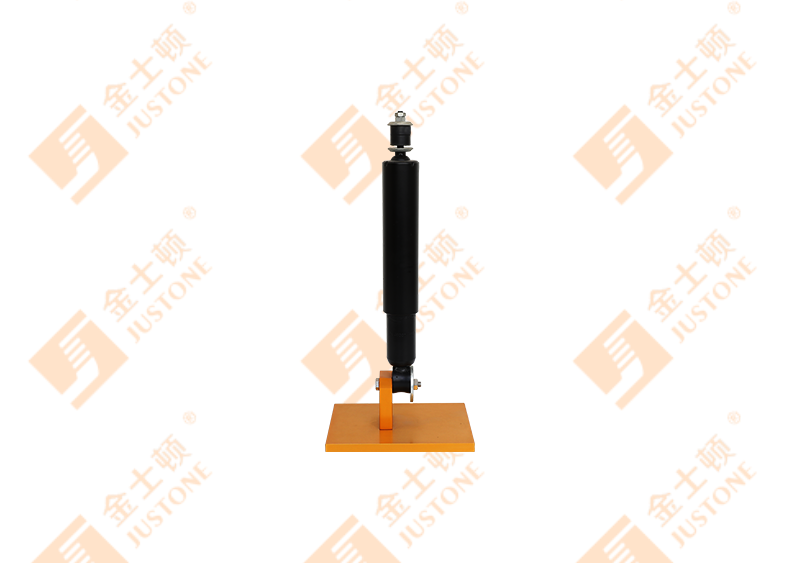
For heavy trucks, the chassis damper manages a very large unsprung mass, and the failure is usually reported as a vague or wandering feel rather than a sharp handling problem. OEM-grade chassis dampers are matched to axle load, frame stiffness, and gross vehicle weight. Knowing how shock absorbers function in a heavy truck chassis gives you the right starting point before you begin adjusting.
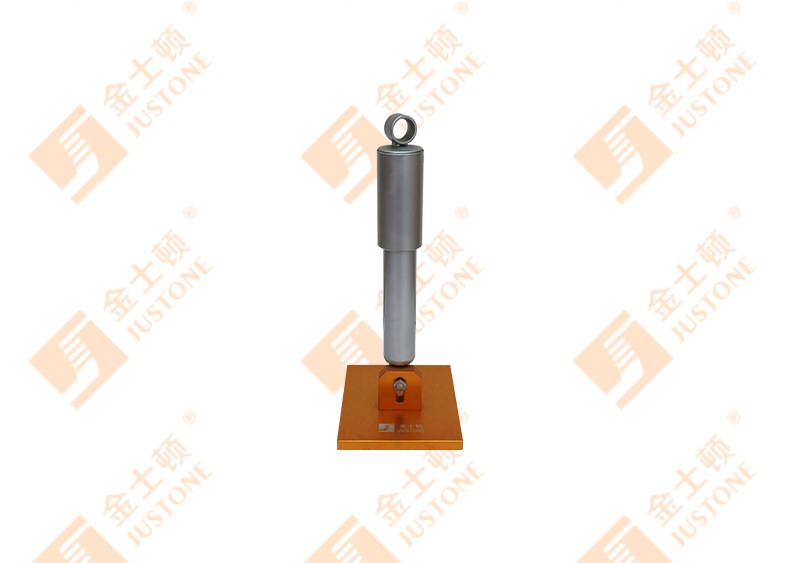 Heavy Truck Chassis Shock Absorbers for Stable CorneringThese OEM-matched chassis dampers address vague or wandering feel from large unsprung mass. Understanding their function helps you begin tuning springs and dampers correctly before adjusting sway bars.View Product →
Sway bars transfer roll resistance across an axle. Increasing front sway bar stiffness changes how strongly the front resists body roll relative to the rear, which directly adjusts cornering balance. A sway bar only works during cornering; it does nothing in a straight line, so it should be tuned only after springs and dampers are close.
Geometry means camber, caster, and toe. Camber angles the tire relative to the road plane, caster affects straight-line stability and steering return, and toe influences tire wear and turn-in response. On commercial vehicles, excessive camber creates edge wear that is easily misdiagnosed as a damper or bearing problem. Verify geometry before spring and damper work, because a small alignment error can make a good damper feel defective.
Use the table below as a starting point, not as a complete diagnosis. Every vehicle responds differently, so change one setting, test, and record the result.
| Symptom | Most Likely Cause | First Adjustment to Try |
|---|---|---|
| Understeer on corner entry | Front springs too soft or front rebound too slow | Increase front spring rate or slow front rebound |
| Oversteer on corner exit | Rear rebound too slow or rear sway bar too stiff | Slow rear rebound or soften the rear sway bar |
| Bottoming out over sharp bumps | Spring rate too low for the actual load | Increase spring rate; check bump stop clearance |
| Floaty, wallowing ride at highway speed | Rebound damping too slow | Increase rebound in small steps |
| Harsh ride on sharp impacts | High-speed compression damping too high | Reduce high-speed compression |
| Uneven or feathered tire wear | Alignment out of spec or damping mismatch | Verify alignment, then rebalance damping |
Commercial vehicle tuning is not passenger car tuning with a larger budget. Three areas change the approach.
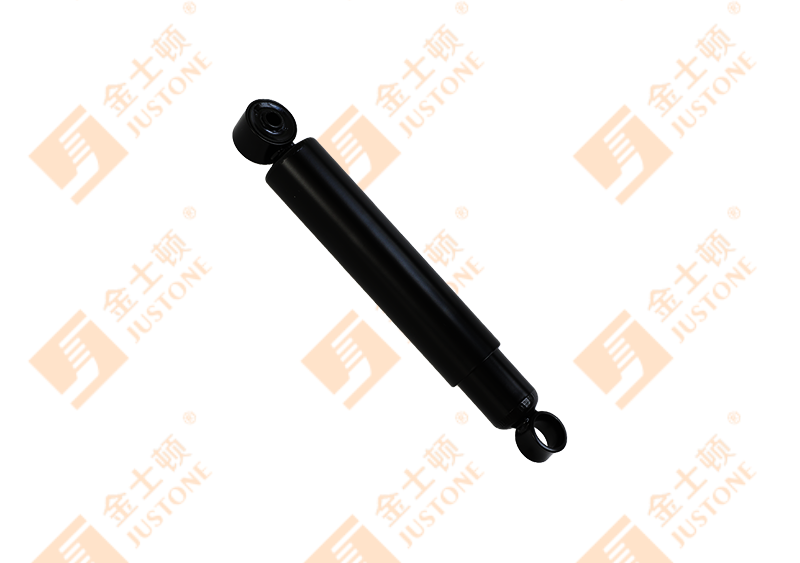
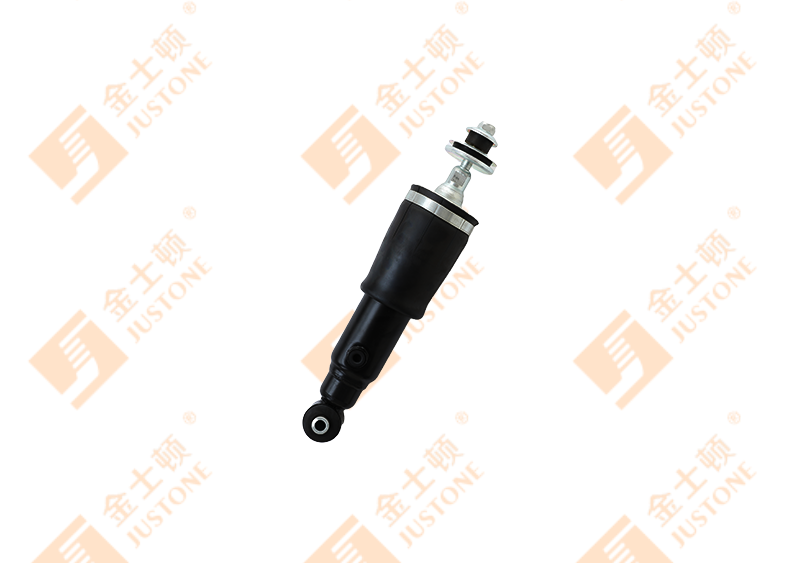
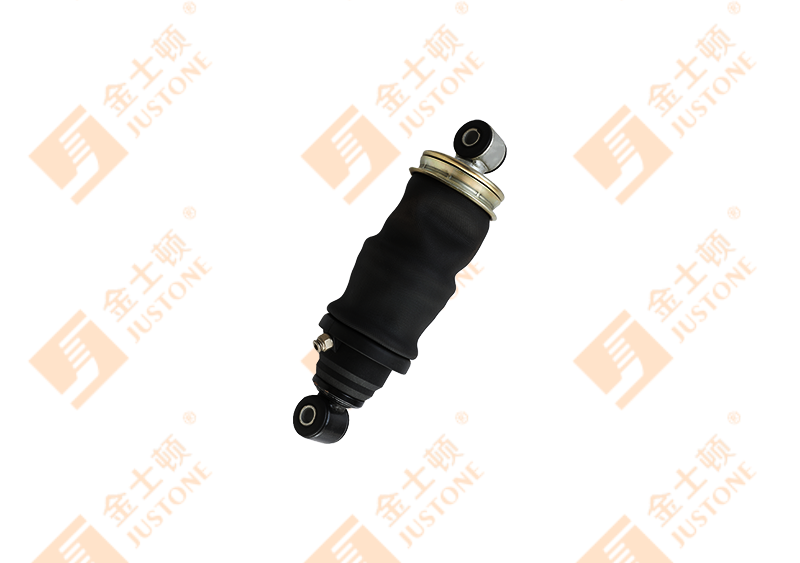
Cab dampers and seat dampers isolate the driver from chassis vibration, and prolonged exposure to whole-body vibration is a real fatigue and health issue. Tuning the cab suspension together with the chassis suspension, rather than in isolation, keeps the driver sharper through a full shift. OEM cab shocks are selected around cab mount geometry and loaded frame height, so the damper specification should come from the vehicle's loaded configuration.
 Cabin Shock Absorbers for Driver Comfort and StabilityCab and seat dampers reduce whole-body vibration and driver fatigue. Properly matched to cab mount geometry and loaded frame height, they should be tuned with the chassis suspension for a sharper shift.View Product →
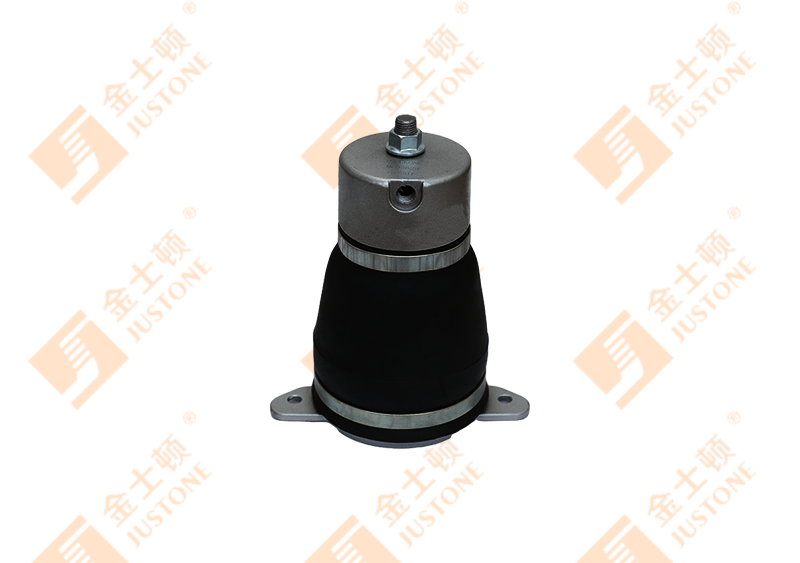
Trailer dampers smooth the ride, but they also control articulation at the coupling and reduce the risk of trailer sway. That makes them a stability component, not just a comfort component. The tuning target is enough damping to stabilize the trailer without making the coupling harsh or restricting legitimate articulation. On drawbar and coupling arrangements, trailer dampers change the longitudinal behavior of the entire vehicle combination.
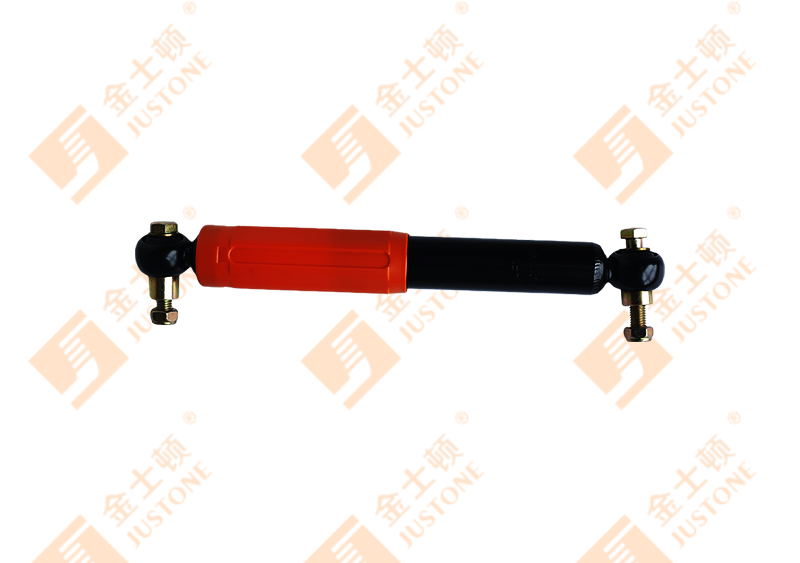 Trailer Coupling Dampers to Reduce Trailer SwayThese dampers control articulation at the coupling and improve stability, not just comfort. They manage longitudinal behavior and complement sway bar tuning by handling load-dependent forces.View Product →
The difference between an empty deck and a full load can multiply axle load several times. This is the dominant input for spring rate and damper valving. A suspension tuned perfectly for the empty return leg can be unsafe under load, and the reverse is just as true. Commercial tuning therefore starts from the worst-case loaded condition and compromises back toward the empty condition, not the other way around.
Follow the same sequence every time and keep a written log. The repeatability of the process matters more than any single setting.
Even a patient tuner can spend days clicking through damper positions on a modern commercial vehicle, and some setups simply cannot be corrected by adjusting the dampers already fitted. If the complaint survives a verified baseline, meaning correct tire pressure, confirmed ride height, alignment in spec, and clean damper settings, the next step is to work with a manufacturer that can re-valve or rebuild dampers around measured axle loads.
A shock absorber manufacturer with OEM experience brings production-grade valving curves and test facilities, which shortens the process from trial and error to engineering. Look for a supplier that builds under IATF 16949, has supplied original equipment manufacturers, and offers a product range covering chassis, cab, and trailer applications so the whole vehicle follows one consistent valving philosophy. That is the difference between buying a part and engineering a setup. A commercial vehicle shock absorber manufacturer with that background can usually turn a handling complaint into a damper specification instead of a replacement order.
Contact us for the latest news.
Copyright @ Hangzhou Justone Industry Co., Ltd.
 OEM Commercial Vehicle Shock Absorbers Manufacturers
Wholesale Car Shock Absorbers Factory
OEM Commercial Vehicle Shock Absorbers Manufacturers
Wholesale Car Shock Absorbers Factory