English
 Deutsch

Didn't find a product that suits you?
Contact us for the latest news.

A 2016 tractor unit comes into the workshop with a leaking front-axle damper. The counter has two boxes on the shelf that look identical: same body diameter, same pin-to-pin length. Only one of them is valved for that truck's 7.5-tonne axle rating. The wrong box bolts straight on, and the driver spends the next three months complaining about a harsh, floaty front end that nobody can trace.
The way out of that situation is procedural rather than clever. Read the full 17 characters of the VIN, decode the build, and let the catalog narrow the part before anyone breaks a seal. A VIN never contains a part number, but it does identify the exact configuration the factory built, and that configuration is what every OEM parts catalog is indexed against.
Content
A VIN is a fixed structure, and reading it in the right order prevents the most common lookup mistake, which is stopping after the first eleven characters and assuming the rest is just a serial number.
The letters I, O and Q never appear in a VIN, so every zero is a zero. That matters in practice: one mistyped character usually pulls up a different model year, and from there a completely different damper specification.
On a commercial vehicle the VIN is stamped in more than one place. When documents and stampings disagree, the stamping wins.
Trailers are a separate case. A trailer has its own VIN, normally on a plate riveted to the drawbar or front cross-member, and a decoder will identify the trailer without necessarily identifying the damper. On trailer running gear the damper is usually defined by axle make, axle capacity and suspension type, so keep the axle plate data next to the VIN in your records.
A VIN lookup is a filter, not a guarantee. These are the cases that still need a human check before the order is confirmed.
None of these methods is wrong on its own. The useful question is which one you are relying on and what it cannot tell you.
| Method | What it confirms | Best used for | Main risk |
|---|---|---|---|
| VIN decode | Build configuration as manufactured | Ordering catalog parts for a standard vehicle | Misses mid-year changes and later modifications |
| OEM chassis or engine number | The specific assembly actually fitted | Resolving ambiguity on mixed-build trucks | Requires access to the OEM parts system |
| Measuring the removed part | Dimensions and mounting geometry | Confirming a candidate before fitting | A part can match dimensionally and still be valved wrong |
| Supplier cross-reference against the VIN | Fitment plus application data | Safety-critical or high-value dampers | Only as good as the supplier's data |
A filter that is a few millimetres too long simply will not seal, so the mistake is obvious. A damper that is a few millimetres too long bolts up cleanly and then destroys itself against the bump stop. Fitment for suspension parts depends on several variables at once: extended and compressed length, mounting style such as eye-to-eye, stem-to-eye or pin-to-pin, bore diameter, stem taper, bushing hardness, gas charge and the damping curve itself.
On a heavy truck, the damper has to control axle mass and wheel movement at the same time, keeping the tyre in contact with the road over broken surfaces without transferring every impact into the chassis. Get the valving wrong and you see it as irregular tyre wear, wheel hop under braking and a cab that pitches over expansion joints. The principles behind that behaviour are covered in our notes on how shock absorbers function in a heavy truck chassis.
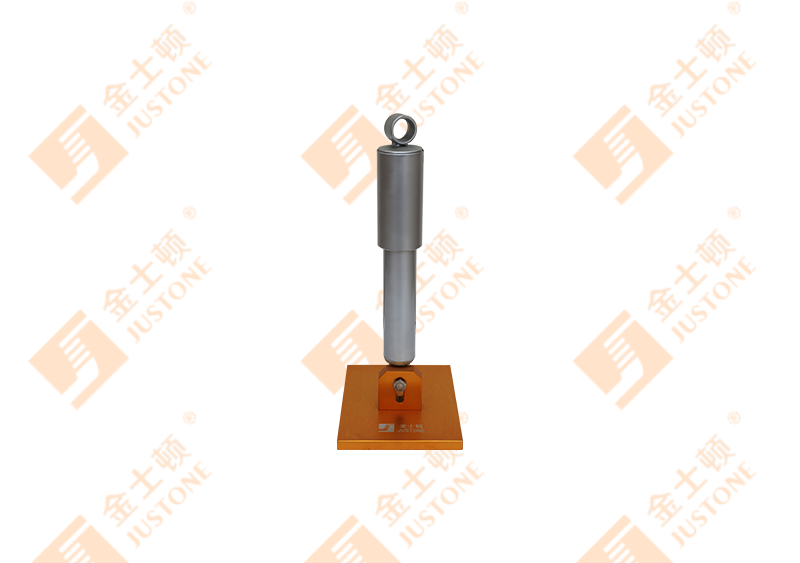 Heavy Truck Chassis Shock AbsorbersThis category covers custom OEM and wholesale heavy truck chassis shock absorbers, with links to detailed product information for chassis damper selection.View Product →
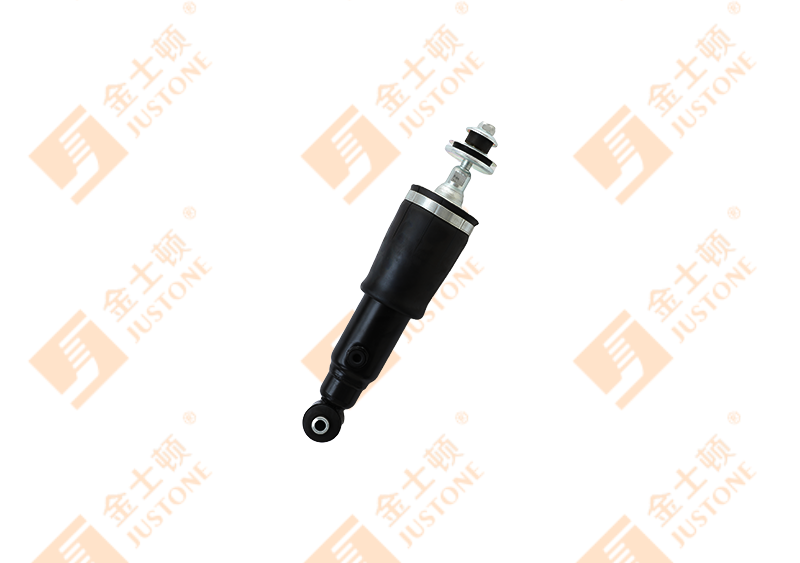
Cab dampers are less forgiving still. Cab suspension carries a light, high-mounted mass, so a stiff damper sends harshness straight to the driver while an undersized one allows the cab to pitch and roll. The part number must match the cab suspension type, not just the model name.
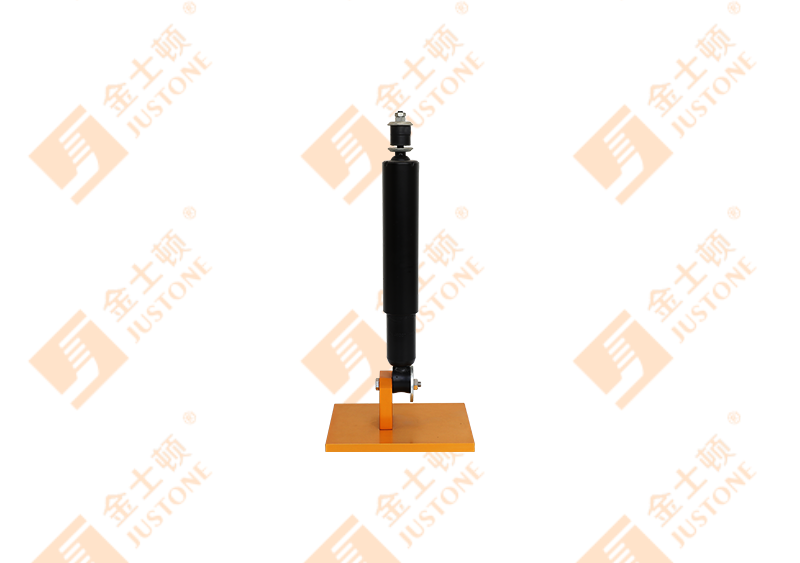 Cabin Shock Absorbers for Commercial VehiclesView this custom OEM and wholesale cabin shock absorber category to find cab dampers that help manage cabin movement and vibration.View Product →
Trailer dampers and coupling dampers sit in the same category of consequence. They influence how a combination behaves in a crosswind, under braking and over uneven ground, and a mismatch shows up as tyre scrub, poor towing stability and accelerated wear across the axle set. Trailer VINs rarely resolve this alone, which is why axle capacity and suspension data belong in the same conversation.
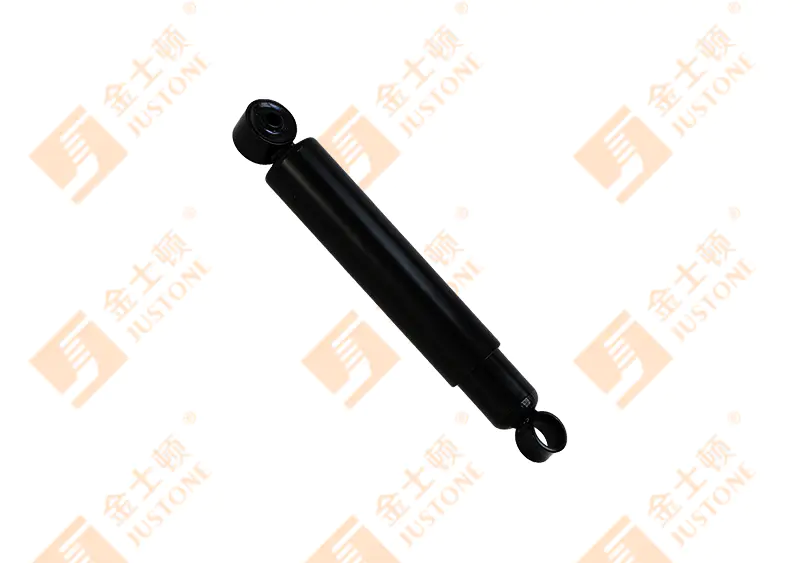 Custom OEM Suspension Shock AbsorbersThis custom OEM and wholesale suspension shock absorber category directs visitors to detailed information across the broader shock absorber range.View Product →
Fleets do not run on identical trucks. A process that works across ages and configurations looks roughly like this.
Finding parts by VIN works best when it is treated as the first check rather than the only one. Decode the full 17 characters, read the fitment notes properly, and confirm the candidate against the part in your hand. That sequence is slower by minutes and faster by weeks, because it removes the returns, the repeat labour and the slow erosion of driver confidence that comes from a suspension that never quite feels right. If you are sourcing commercial vehicle dampers for a mixed fleet, the product catalog is organised by application, so you can start from the vehicle type and finish with a VIN confirmation from our team.
Contact us for the latest news.
Copyright @ Hangzhou Justone Industry Co., Ltd.
 OEM Commercial Vehicle Shock Absorbers Manufacturers
Wholesale Car Shock Absorbers Factory