English
 Deutsch
Didn't find a product that suits you?
Contact us for the latest news.

Two light vans, same payload, same delivery route. One is front-wheel drive, one is rear-wheel drive. Six months into service the front-drive van comes back with outer-shoulder wear on the front tires, a steering wheel that tugs under hard acceleration, and drivers complaining about a jolt through the floor pan over broken pavement. The drivetrain choice did more than decide which wheels spin.
Front-wheel drive (FWD) sends engine torque to the front wheels only. Because those same wheels also steer and carry the majority of the vehicle's static weight, the front corners work considerably harder than the rear — and spring rates, damper valving, top mounts, tire wear patterns and cabin comfort all follow from that single fact.
Content
On an FWD vehicle the gearbox and final drive share one housing — the transaxle — and two half-shafts deliver torque to the front hubs through constant-velocity joints. Most cars and light vans mount that package transversely, ahead of the front axle line. That positioning pushes mass forward and leaves the rear axle with a narrow job: carry load, stay planted, and follow.
Three duties then stack on the same pair of tires:
A typical transverse FWD car sits at roughly 60/40 front-to-rear static distribution; a rear-drive car of similar size is usually closer to 50/50. That shift explains most of the behaviour differences a driver notices, from turn-in on a wet corner to nose dive under braking.
Nothing in vehicle packaging is free, but FWD buys more with less. Removing the propshaft tunnel lets the floor sit lower and flatter, which is why small hatchbacks and panel vans can offer a deep load bay and a flat rear footwell. One integrated transaxle replaces a separate gearbox, driveshaft, rear differential and rear axle housing, so parts count, assembly time and build cost all fall.
Traction is the second win. In rain or light snow the driven wheels are the ones sitting under the engine, so there is weight pressing them into the road when it matters most. That advantage fades on steep, ice-covered climbs and largely disappears when the front axle is lightly loaded, such as a rear-heavy van with an empty cargo box.
| Characteristic | Front-wheel drive | Rear-wheel drive | All-wheel drive |
|---|---|---|---|
| Driven wheels | Front only | Rear only | All four, often on demand |
| Typical static weight split | About 60/40 front to rear | Close to 50/50 | Varies, usually front-biased |
| Behaviour at the grip limit | Pushes wide, understeer | Tail can rotate, oversteer | Depends on the control strategy |
| Wet or lightly snowed roads | Good, weight over driven tires | Weaker when unladen | Strongest, at higher cost |
| Cabin and load floor | Flat, no propshaft tunnel | Tunnel required | Tunnel required |
| Parts count and cost | Lowest | Higher | Highest |
| Typical wear points | Front tires, CV boots, top mounts | Rear tires, propshaft joints | All four tires, transfer unit |
FWD is a series of deliberate compromises, and buyers should know which ones they are accepting:
This is where the layout stops being an abstract specification. On a strut-equipped front corner, the damper is a structural member: it carries vertical load, spring force and a lateral bending moment created by the offset between the tire contact patch and the strut axis. That bending load is why front piston rods, guide bushings and seals are specified more conservatively than the rear, and why a worn top mount bearing shows up first as a clunk over speed bumps and later as memory steer.
The rear axle has the opposite problem. With roughly 40% of the weight over it — and much less when the vehicle is empty — the rear dampers have little load to work with, so valving has to be precise. Too much rebound damping and the unladen vehicle skips and chatters over broken surfaces; too little and the rear axle hops under braking, exactly when stability matters.
Two production details matter as much as the tuning. Left and right dampers from the same batch should match closely, because a force difference at reference velocities shows up as a steady pull or uneven front tire wear that no alignment will cure. And gas-charged units need consistent charge pressure, since a loss of charge changes the force curve long before anything leaks visibly.
FWD is not confined to passenger cars. A large share of light commercial vans and chassis-cab derivatives up to about 3.5 tonnes drive the front wheels, because a low, flat load floor and a square cargo box outsell a propshaft tunnel. The trade is that the front axle can run close to its rated load when the van is full, which puts spring and damper specification on the critical path rather than at the end of the programme.
Cab-over and short-nose commercial cabs add a second issue: the driver sits almost above the front axle, so road input reaches the cab with very little filtering. Cabin dampers and seat dampers do the work that a long wheelbase and a distant firewall do for a passenger car, which is why cab suspension is treated as a separate discipline from chassis tuning, as set out in this review of how drive-down cabin shock absorbers reduce vibration in the cab.
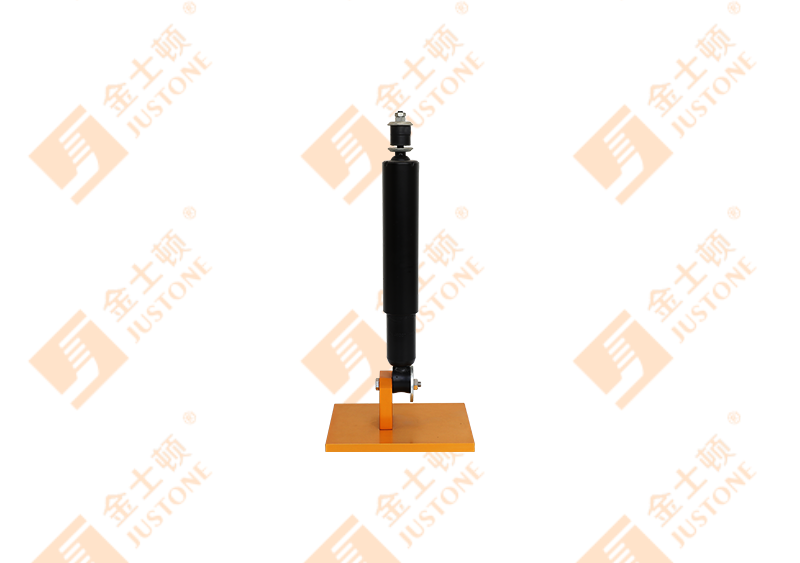 Cabin Shock Absorbers for Commercial Vehicle CabsExplore this category of custom OEM cabin shock absorbers for wholesale, suited to cab-over and short-nose cabs where cabin dampers reduce road input.View Product →
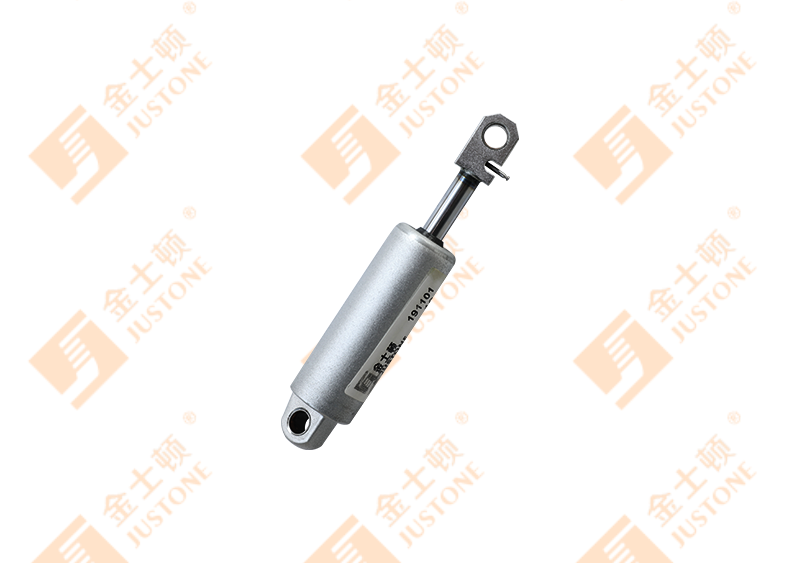 Seat Damper Shock Absorbers for Commercial Vehicle SeatingReview this OEM seat damper category, including an ISRI seat shock absorber for Scania trucks, for commercial vehicle seating applications and wholesale supply.View Product →
Most damper problems in an FWD programme are specification problems, not manufacturing problems. The checks below catch the majority of them before tooling is cut:
Front and rear axles should be developed as a set. Tuning the front for body control and leaving the rear to whatever fits the packaging produces a vehicle that feels planted at 60 km/h and nervous at 110 km/h.
Front-wheel drive rewards the engineer who measures first. Weigh the vehicle in the states it will actually operate in, define the load each damper sees, then choose valving, rod diameter and mount hardware against those numbers. Suppliers with test data for both passenger-derived and commercial platforms can usually support that conversation, and asking for the data is a reasonable part of any sourcing decision.
For a fleet buyer the practical version is shorter: if a front-drive van keeps eating front tires and jolting drivers over speed bumps, the fix usually sits in the damper and mount specification, not in the alignment bay.
Contact us for the latest news.
Copyright @ Hangzhou Justone Industry Co., Ltd.
 OEM Commercial Vehicle Shock Absorbers Manufacturers
Wholesale Car Shock Absorbers Factory