English
 Deutsch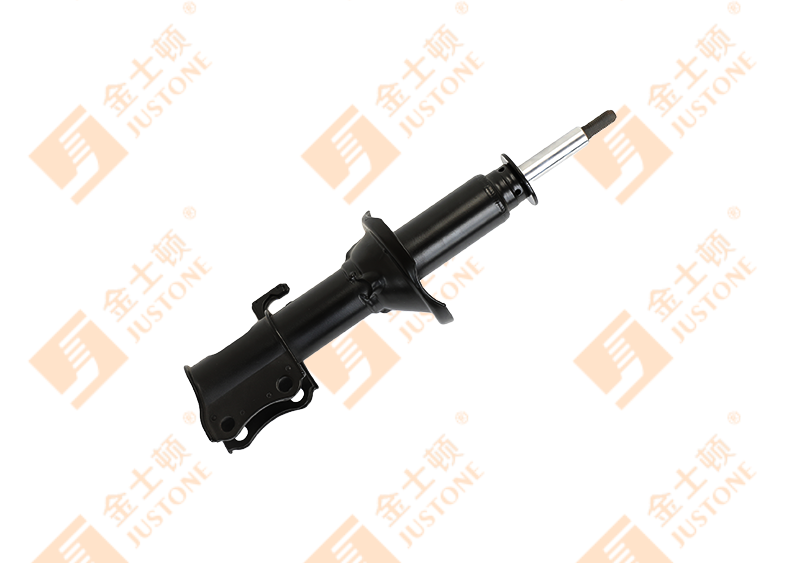
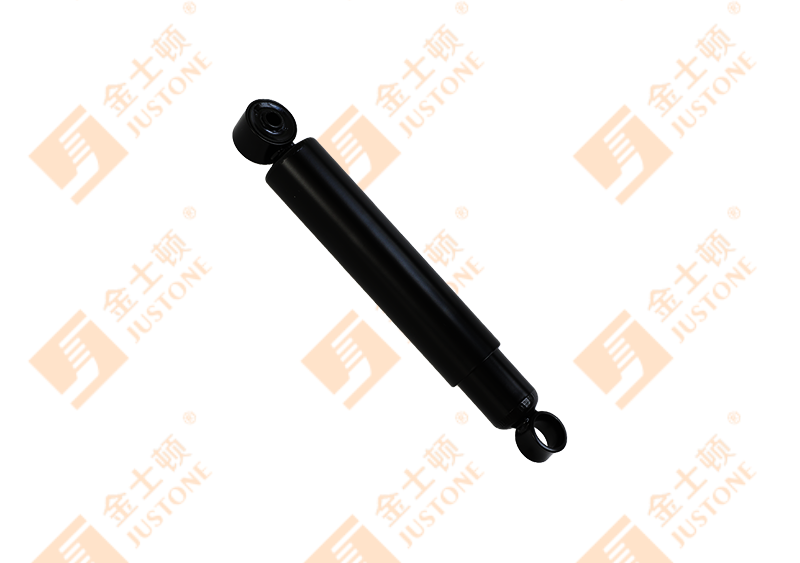
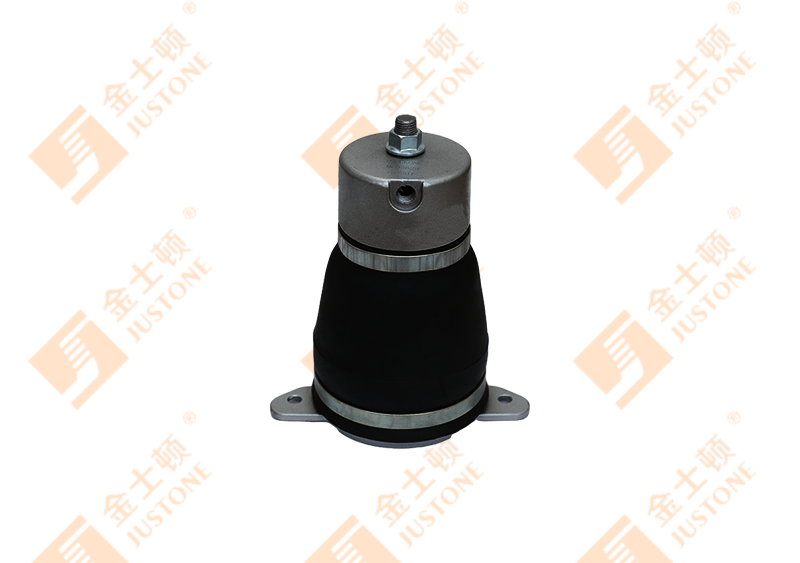
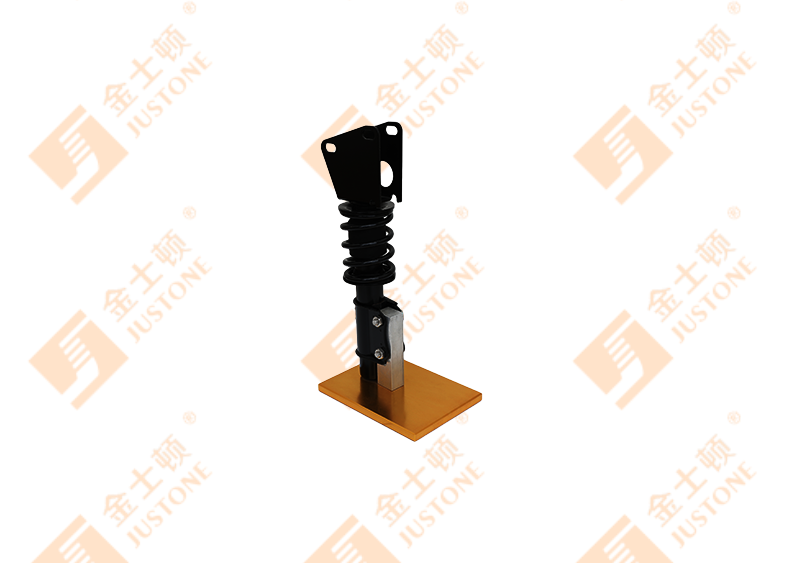
Didn't find a product that suits you?
Contact us for the latest news.

A fleet manager replaces the rear shock absorbers on a three-year-old heavy truck because the driver keeps reporting a bouncing cab. Two weeks later, the complaint returns. The next inspection finds a sagging air spring and a cracked trailing-arm bushing. The shocks were never the root cause, and the suspension was not the only problem. This sequence plays out in workshops every month, which is exactly why the suspension versus shocks question deserves a precise answer.
Start with a clear separation: the suspension is the complete system that supports the vehicle and controls how the axle moves. A shock absorber is one component inside that system, and its only job is to control how quickly the spring moves. The two are not interchangeable, they are not alternative repairs, and they fail in different ways.
Content
The suspension system includes everything that connects the axle to the frame or body: leaf springs, coil springs, air springs, torsion bars, control arms, trailing arms, radius rods, bushings, ball joints, and stabilizer bars. Its responsibilities are straightforward but demanding. It supports the static weight of the vehicle and the load above it. It keeps the tires in contact with the road so that braking, steering, and traction force have a surface to work against. It locates the axle so that wheel alignment stays within specification through the full range of travel. And it absorbs energy from road irregularities by storing it in the springs.
In a heavy truck, these jobs are harder than in a passenger car because the operating weight changes. A tractor that runs empty on one shift and at maximum gross weight on the next places very different demands on its spring rate. That is why commercial suspension design balances spring stiffness, ride height, and load capacity instead of optimizing comfort alone.
A shock absorber is a hydraulic damping device. It does not carry the vehicle's weight. Its job is to convert kinetic energy into heat. Inside the shock body, a piston moves through hydraulic oil, forcing the oil through small calibrated passages. The compression stroke controls how quickly the suspension compresses over a bump, while the rebound stroke controls how quickly it extends afterwards. If rebound damping is too low, the spring throws the body upward past its resting position and the vehicle bounces repeatedly. If damping is too high, the suspension feels harsh because the shock resists the spring instead of controlling it.
That is why the damping curve must match the spring rate. Original equipment manufacturers specify shock absorbers together with the spring package. A shock that performs well on a leaf-spring chassis can feel completely wrong on the same vehicle fitted with air springs.
Put the two side by side, and the differences become practical.
| Comparison Point | Suspension System | Shock Absorber |
|---|---|---|
| Primary role | Supports vehicle weight and locates the axle | Controls spring oscillation and body motion |
| Main components | Springs, control arms, bushings, air springs, linkages | Piston, rod, seals, hydraulic oil, valves |
| Load bearing | Yes, carries all static load | No, transfers no static weight |
| Typical failure signs | Sagging ride height, clunking, geometry shift | Excess bouncing, oil leakage, nose dive |
| Replacement cost | Higher, often requires alignment | Lower, normally no alignment needed |
| Effect if ignored | Unstable handling, uneven tire wear, load damage | Float, longer braking distance, driver fatigue |
Two practical rules follow from this table. First, never replace shocks to fix a vehicle that sits low; that is a spring or air-spring condition. Second, do not condemn the suspension when the symptom is continued bouncing after a bump; bounce is primarily a damping symptom.
Think of the spring as an energy storage device and the shock absorber as a controlled release valve. When a wheel hits a pothole, the spring compresses and stores the energy of the impact. Without a shock, the spring releases that energy by oscillating at its natural frequency, and the vehicle bounces until friction slowly bleeds the energy away. The tire loses road contact between cycles. The shock absorber converts that stored energy into heat, so the spring returns to its resting position once instead of five times.
This cooperation explains a common test result. A vehicle with a weak spring and new shocks still sits low because the shock cannot hold weight. A vehicle with a healthy spring and worn shocks still bounces because nothing slows the spring. Both components must stay within specification for the pair to behave correctly.
Worn shocks and worn suspension parts produce different symptoms. Knowing which is which keeps your repair cost from being wasted.
The wording matters: shocks produce motion symptoms, while suspension wear produces position and noise symptoms. When both appear at the same time, repair the suspension first, then re-evaluate the shocks. A new shock absorber cannot compensate for a failed bushing, and a new spring cannot replace missing damping.
For a commercial vehicle, the suspension versus shock question appears in three separate positions, and mixing them up is expensive.
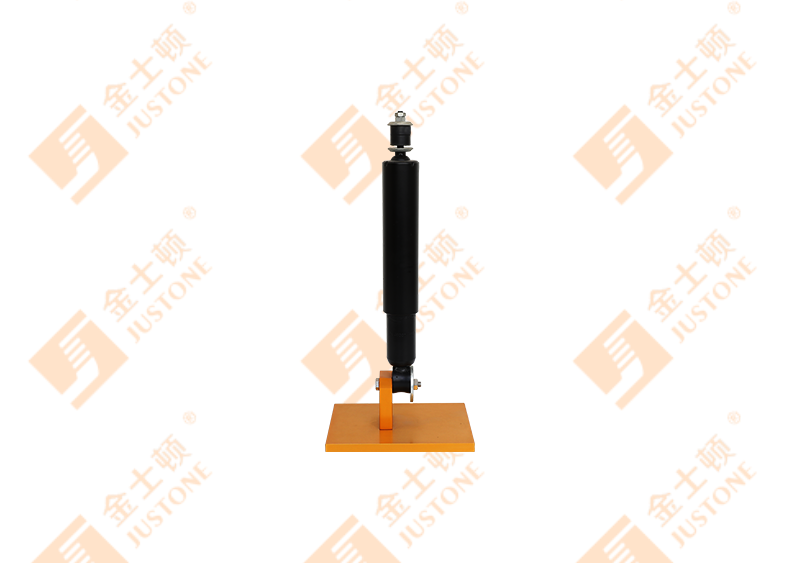
The chassis suspension on a heavy truck controls the drive axle, the steer axle, and any trailer axles. The shock absorber works beside the leaf or air springs to keep the axle planted and to control load transfer during braking. When chassis shocks wear out, the driver feels float, tire wear becomes uneven, and braking distance increases. On a loaded truck, that combination is a safety issue rather than a comfort issue. A more detailed explanation of how shock absorbers function in heavy truck chassis is covered in our technical article.
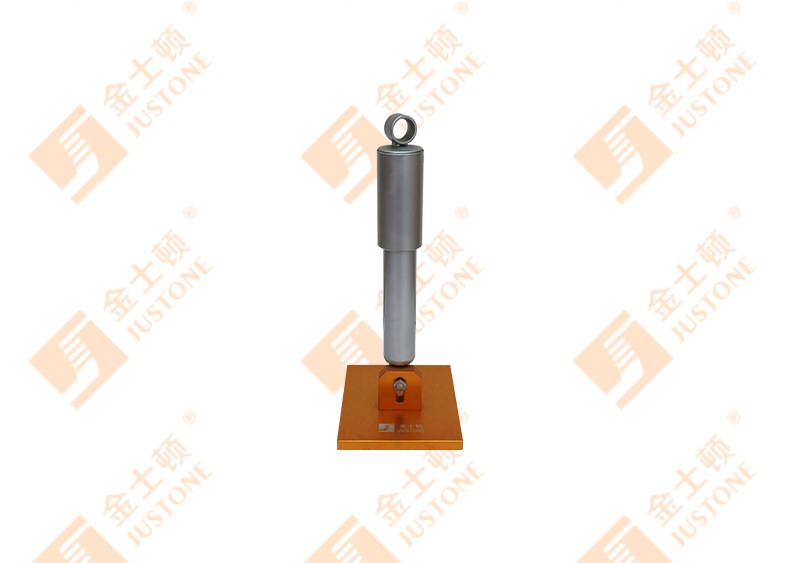 Heavy Truck Chassis Shock Absorbers for Stable Load ControlThese chassis shocks work alongside leaf or air springs to keep axles planted during braking and load transfer. Worn units cause float, uneven tire wear, and longer stopping distances, making this a safety-critical component for loaded trucks.View Product →
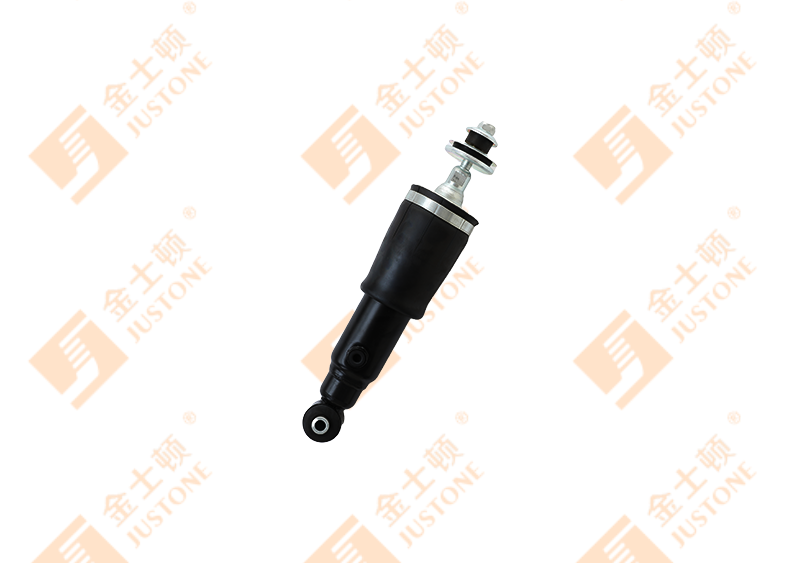
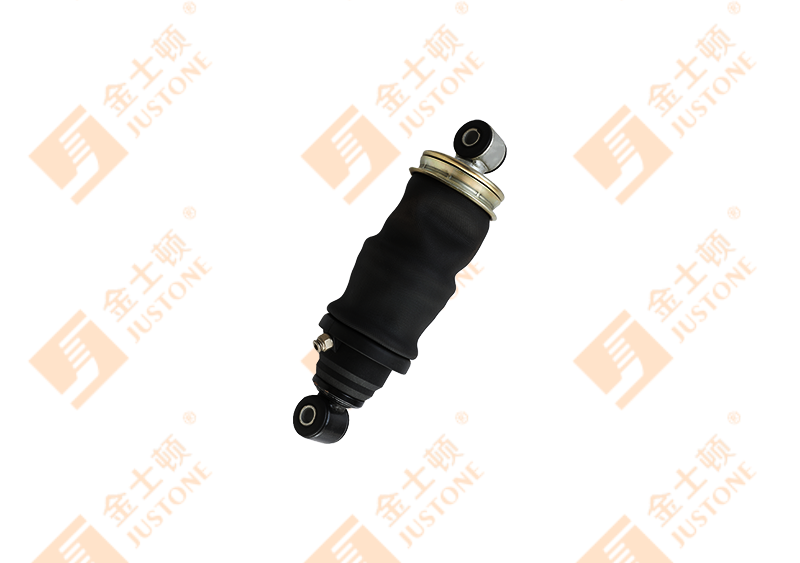
The cab sits on mounts that include rubber isolators and dampers. Drive-down cab shocks were developed for cabs that need to be lowered or tilted for service access, and they control the cab during that movement as well as during normal driving. If a cab shock fails, the cab rocks relative to the chassis, and the driver perceives an unsettled ride even when the chassis shocks are healthy.
 Cabin Shock Absorbers for Controlled Cab MovementThese cab shocks include rubber isolators and dampers, with drive-down versions for service access. They prevent rocking relative to the chassis and maintain ride stability, avoiding an unsettled feel even when chassis shocks are healthy.View Product →
The seat is the last link between the driver and the road. A seat damper controls vertical movement of an air-suspended seat. It is a small component, but its effect over an eight-hour shift is large. A worn seat damper allows low-frequency movement to reach the driver, increasing fatigue and reducing alertness.
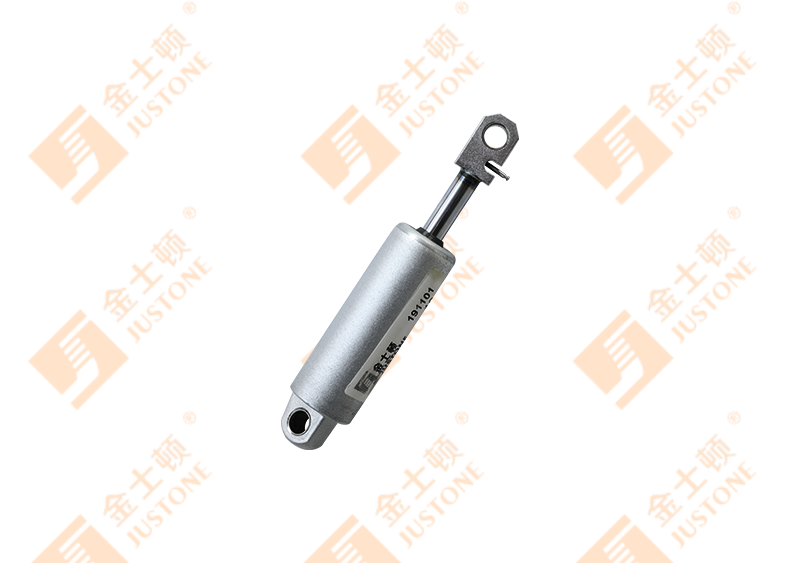 Seat Damper Shock Absorbers for Driver ComfortThis seat damper controls vertical movement of an air-suspended seat, mitigating low-frequency motion that increases fatigue over long shifts. It is a small but vital component for alertness and comfort in heavy trucks.View Product →
Each of these positions uses a different shock length, stroke, and damping curve. A chassis shock cannot replace a cab shock, and a seat damper is not a scaled-down chassis shock. The internal valve specifications are tuned for the specific mass they control.
Replacement strategy follows the same logic as diagnosis. Replace shock absorbers in pairs on the same axle, even when only one side shows external leakage, because the other side is usually near the end of its service life. When you replace shocks, inspect the springs, bushings, and mounting hardware at the same time. A failed spring will quickly ruin a new shock absorber. Use the vehicle manufacturer's specification for length, stroke, mounting type, and damping force, and fit components that match the gross vehicle weight rating.
Fleet procurement teams sometimes mix brands to save money, but mixing damping curves on the same axle creates asymmetric behavior during lane changes and emergency braking. Consistency between sides and between axle groups matters more than the name on the box.
This is also why original equipment manufacturers prefer to work directly with specialized shock absorber manufacturers. A supplier that builds chassis shocks, cabin shocks, and seat dampers in the same facility can match every application requirement instead of adapting a generic part.
Suspension and shocks are not competing repairs. The suspension system carries the load and positions the axle; the shock absorber controls how that load moves. When a ride complaint comes in, check position problems first, then motion problems, and repair the system as a whole. Commercial vehicles that run long hours need both layers working together.
Before you order parts, confirm which layer has failed. The lowest-cost repair starts with the correct diagnosis, not with the cheapest component.
Contact us for the latest news.
Copyright @ Hangzhou Justone Industry Co., Ltd.
 OEM Commercial Vehicle Shock Absorbers Manufacturers
Wholesale Car Shock Absorbers Factory
OEM Commercial Vehicle Shock Absorbers Manufacturers
Wholesale Car Shock Absorbers Factory